


Mobility Aids for Seniors: A 2026 Comprehensive Resource for Independence
Updated: Sep 16

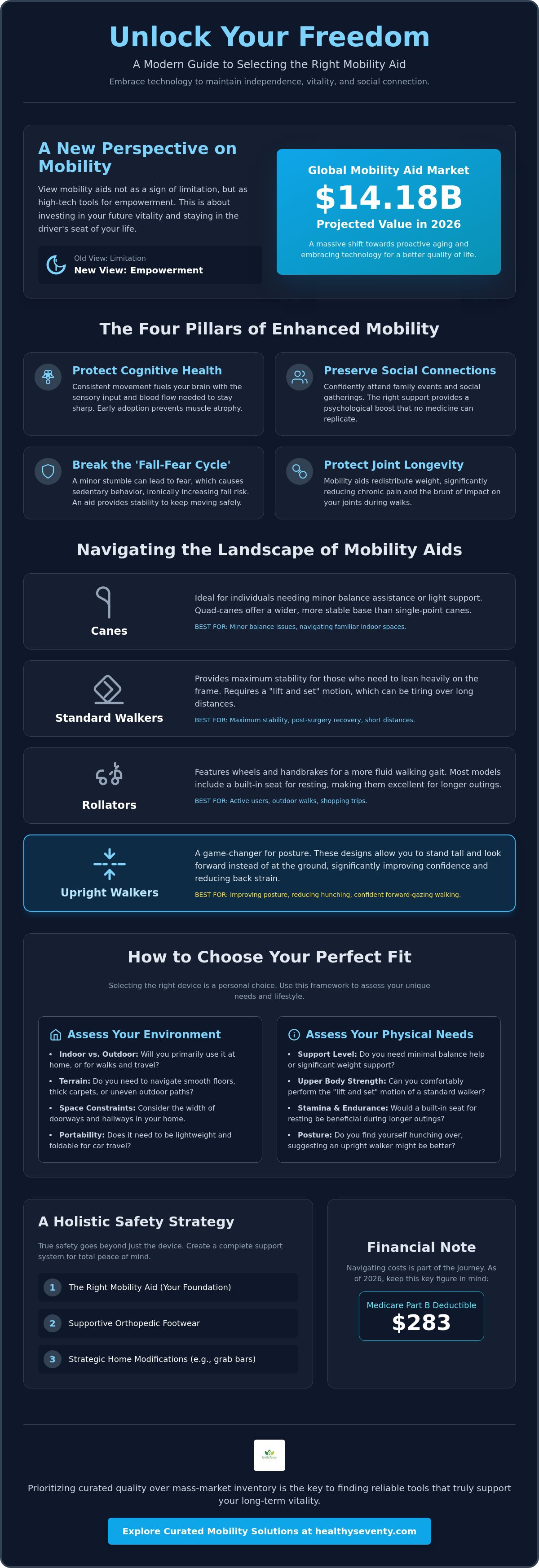
What if the tools we often associate with slowing down are actually the very things that could speed up your social life and restore your sense of adventure? Selecting the right mobility aids for seniors isn't about admitting defeat; it's about investing in your future vitality. With the global mobility aid market reaching an estimated $14.18 billion in 2026, it's clear that more people are choosing to prioritize their freedom and safety through modern technology.
You might feel a bit overwhelmed by technical jargon like rollators versus walkers, or perhaps you worry that needing assistance might limit your social connections. It's completely natural to feel hesitant when your goal is simply to move without pain or the constant fear of a fall. We understand these concerns and believe that every stage of life should be lived with confidence and grace.
This expert-curated guide will help you navigate these choices with clarity, ensuring you find the perfect tools to maintain your independence and keep your calendar full. We will explore the latest safety standards, break down 2026 Medicare coverage details like the current $283 Part B deductible, and help you select the right equipment for both home comfort and safe travel.
Table of Contents
The Role of Mobility Aids in Maintaining Senior Vitality
Choosing to use mobility aids for seniors is often met with a mix of emotions. You might feel that a walker or cane signals a loss of youth, but we invite you to look at it through a different lens. These aren't symbols of limitation; they're high-tech tools designed to unlock a more vibrant second act. By 2026, the global market for these devices has reached $14.18 billion, reflecting a massive shift toward proactive aging. Modern users aren't waiting for a crisis to occur. They're embracing technology to stay in the driver's seat of their own lives.
Research shows a profound link between consistent movement and cognitive health, especially for seniors over 70. When you stay mobile, you're not just exercising your legs; you're fueling your brain with the sensory input and blood flow it needs to stay sharp. Early adoption is key. Waiting too long to use a supportive device often leads to muscle atrophy and a decline in stamina that's much harder to reverse later. If your muscles don't get regular use, they lose the ability to support your frame, creating a secondary health crisis. Today's 2026 designs have shed the clinical, 'hospital' aesthetic of the past. You'll find sleek aluminum frames, carbon fiber accents, and smart sensors that feel more like premium sports equipment than medical gear. These aesthetics matter because they help you feel like yourself rather than a patient.
Preserving Independence and Social Connection
Isolation is one of the greatest risks to senior well-being. Being able to attend a granddaughter's graduation or a neighborhood book club provides a psychological boost that no medicine can replicate. When you have the right support, you reduce the physical burden on your loved ones, transforming the caregiver relationship back into a partnership of mutual enjoyment. Independence in the context of mobility is the ability to choose one's own path daily. Understanding the different categories of mobility aids is the first step toward reclaiming your rhythm.
Mobility as a Preventive Health Strategy
Many people fall into the 'fall-fear cycle.' This happens when a minor stumble leads to a fear of falling, which then causes a person to stay seated more often. This sedentary behavior weakens the core and legs, ironically making a fall more likely. Using mobility aids for seniors breaks this cycle by providing the stability needed to keep moving safely. These devices protect your joint longevity by redistributing weight, which significantly reduces chronic pain during walks. When your joints aren't taking the full brunt of every step, you can walk further and more frequently. For the best results, consider integrating these tools with non invasive joint pain relief to create a holistic approach to your daily wellness.
Navigating the Landscape: Different Categories of Mobility Aids
How do you distinguish between a tool that helps you navigate the kitchen and one that empowers a mile-long stroll through the park? The variety of mobility aids for seniors is vast, ranging from simple balance supports to high-tech powered vehicles. Choosing the right mobility aid requires understanding how each category serves a specific lifestyle need. While some devices focus on indoor stability, others are engineered specifically for the rigors of travel and outdoor exploration.
Walking Supports: Canes, Walkers, and Rollators
The most common starting point for many is manual walking support. A standard walker provides maximum stability for those who need to lean heavily on the frame, but it requires a "lift and set" motion that can be tiring over long distances. In contrast, a rollator features wheels and handbrakes, allowing for a more fluid walking gait and a built-in seat for rest. If you find yourself hunching over a traditional frame, upright walker designs are a game-changer. They allow you to stand tall and look forward rather than at the ground, which significantly improves both posture and confidence. For those who only need minor balance assistance, a quad-cane offers a wider base than a single-point cane, making it ideal for navigating uneven sidewalks or transitions between rooms.
Powered Mobility: Scooters and Power Chairs
When distance or stamina becomes a barrier, powered solutions step in to bridge the gap. A foldable mobility scooter for seniors is perfect for those who still have the upper body strength to steer but need help covering long stretches during travel or shopping trips.
3-Wheel Scooters: These are best for tight indoor spaces and offer a sharper turning radius.
4-Wheel Scooters: These offer superior stability on gravel, grass, or slightly uneven pavement.
It's vital to consider battery range and how easily the unit folds into a car trunk. If you're looking for a curated selection that balances these technical needs with ease of use, you might explore our recommended mobility solutions designed for active living.
Stability Beyond the Sidewalk
Beyond walking, safety tools for the bedroom and bathroom ensure you remain steady during the most vulnerable parts of your day. Bed rails and shower chairs are essential transfer aids that prevent slips during transitions. For the modern traveler, 2026 has brought a surge in ultra-lightweight technology. We now see frames made from aerospace-grade materials that fold with a single touch, ensuring your mobility aids for seniors never feel like a burden when you're boarding a plane or visiting family. These innovations ensure that your world stays as large as you want it to be.
Matching the Device to Your Lifestyle: A Decision Framework
Finding the right support isn't a one-size-fits-all process. It's a personal journey that requires looking at your day-to-day habits with honesty and optimism. When you evaluate mobility aids for seniors, you aren't just looking at a piece of equipment; you're looking for a partner in your daily routine. This framework helps you narrow down the options by focusing on where you go, how you feel, and how you live. Choosing based on your actual lifestyle ensures the device becomes a bridge to your favorite activities rather than a barrier.
The Indoor vs. Outdoor Dilemma
Start by looking at your home. Do you have tight hallways or narrow bathroom doors? If so, a compact frame is a necessity to avoid scuffing walls or getting stuck. If you love spending time in the garden or walking on local park trails, you'll need something with larger, all-terrain wheels and perhaps a bit of suspension to handle the bumps. The best mobility aid is the one that fits your most frequent daily environment. It should never feel like you're fighting the device to get through your own front door or across a gravel path.
Physical Requirements and Ergonomics
Your physical constraints play a massive role in the selection process. Your grip strength matters just as much as your leg power. If you have arthritis, you'll want ergonomic handgrips that don't require a tight squeeze to operate the brakes. The American Academy of Family Physicians offers excellent clinical guidance on choosing a mobility assistive device, emphasizing that a proper fit reduces the risk of secondary injuries like shoulder strain or back pain. Weight capacity and height adjustability are non-negotiable for safety. If the handles are too low, you'll slouch; if they're too high, you'll strain your upper body.
Think about your stamina. If you find yourself needing a break after five minutes of walking, a rollator with a padded seat and backrest becomes essential. This 'rest stop' feature allows you to participate in longer outings without the anxiety of searching for the next bench. Your mobility equipment for independent living should feel like an extension of the body, moving with you rather than against you.
Storage and Transport Logistics
Finally, address the practicalities of storage and transport. Does the device need to fold easily to fit into a car trunk for weekly grocery trips? Or will it stay parked in a hallway closet? If you travel frequently, ultra-lightweight materials like aluminum or carbon fiber are worth the investment for ease of lifting. We've seen many seniors find success by choosing a device that balances durability with a manageable weight. Addressing these logistics early ensures your tool stays in active use rather than gathering dust because it's too heavy to move.
Enhancing Safety and Portability: Beyond the Basic Walker
A truly independent lifestyle isn't built on a single device alone. It's the result of a thoughtful safety ecosystem that combines your equipment with your environment. While mobility aids for seniors provide the physical support needed to move, home modifications like strategic lighting, sturdy grab bars, and low-profile ramps ensure that your living space remains a sanctuary rather than an obstacle course. Think of these changes as the foundation that allows your mobility tools to perform at their best. When your home is optimized for safety, you can focus on the joy of movement rather than the mechanics of avoiding a trip hazard.
Many people overlook the ground-level basics, but your footwear is actually your most fundamental mobility aid. Wearing the best walking sneakers for balance provides the slip-resistant grip and ankle stability necessary to make every step feel secure. Similarly, integrating medical alert systems for seniors acts as an invisible safety net. These systems offer the peace of mind that help is always available, allowing you to explore your neighborhood or travel with renewed confidence. If you're ready to upgrade your safety gear, you can browse our curated selection of orthopedic footwear and safety tools designed to support your vitality.
Mobility on the Go: Travel Considerations
Travel in 2026 has become significantly more accessible thanks to a new generation of portable technology. Modern frames often utilize carbon fiber, which is incredibly strong yet lighter than traditional aluminum, making it easier to lift into overhead bins or car trunks. We've seen a rise in "one-touch" folding mechanisms that allow you to collapse your device in seconds without struggling with complex latches. When flying, remember that TSA guidelines allow you to bring your mobility aids for seniors through security, and most airlines provide gate-checking services at no extra cost. This ensures your support is waiting for you the moment you step off the plane, keeping your adventures seamless and stress-free.
The Posture-Mobility Connection
A common challenge with traditional walkers is the tendency to "hunch" over the handles, which can lead to back pain and a restricted view of your surroundings. To combat this, modern mobility devices for elderly users now frequently feature forearm supports. These allow you to rest your weight on your arms while standing upright, protecting your spinal alignment and opening up your chest for better breathing. Maintaining core strength through simple seated exercises like leg lifts or torso twists also helps you stay steady while using your device. By focusing on your posture, you ensure that your mobility aid remains a source of strength rather than a cause of physical discomfort.
The Healthy Seventy Approach to Curated Mobility Solutions
At Healthy Seventy, we believe that more choice isn't always better choice. The market for mobility aids for seniors is flooded with mass-produced inventory that often prioritizes profit over the specific ergonomic needs of an older demographic. We take a different path. Our team acts as your dedicated researcher, scouring countless sources to present only the most reliable, high-quality tools. We vet every product for durability, ease of assembly, and senior-friendly controls, ensuring that when a resource reaches you, it has already passed our rigorous standards for safety and comfort.
Our philosophy is rooted in the idea of 'curated quality.' We look for equipment that doesn't just assist with movement but actively enhances your lifestyle. This means prioritizing designs that are intuitive to use, even for those managing challenges like arthritis or reduced grip strength. Every recommendation we make is a bridge between complex health information and your everyday choices, helping you build a legacy of vitality and independence.
Why the VOCIC Upright Walker Stands Out
The VOCIC Upright Walker for Seniors is our flagship recommendation because it directly addresses the psychological and physical need for confidence. Unlike traditional designs that often lead to a stooped posture, this model features adjustable forearm supports that promote an eye-level, upright gait. This shift in alignment does more than just protect your back; it changes how you interact with the world. You're looking forward, engaging with others at eye level, and breathing more deeply.
Customer feedback consistently highlights how the transition from a standard walker to the VOCIC model feels like a restoration of dignity. The controls are designed for those with limited hand dexterity, featuring easy-to-engage brakes and a sturdy, comfortable seat for rest. It's a prime example of how modern mobility aids for seniors can be both highly functional and aesthetically sophisticated, removing the clinical feel of traditional equipment.
Your Journey to Renewed Independence
Selecting your equipment is a significant step, but it's only one part of a larger wellness strategy. We encourage you to use our guides to build a customized toolkit that fits your specific needs. Before making a final decision, consult with your healthcare provider to ensure your chosen aid meets the 'medical necessity' criteria, especially if you're looking to utilize 2026 Medicare benefits to cover costs. They can provide the professional validation needed to ensure your safety and help you meet your Part B deductible requirements.
We invite you to join the Healthy Seventy community, where you can find peer support and expert advice as you adapt to your new tools. Remember, it's not about the device itself; it's about the places it allows you to go and the memories you'll continue to create. Your mobility is the key to your social connection and mental well-being. By choosing curated solutions, you're choosing to live your later years with the energy, clarity, and freedom you deserve.
Step Forward with Confidence and Clarity
Reclaiming your independence is a journey that begins with a single, empowered choice. We've explored how the right mobility aids for seniors act as vital partners in your daily life, protecting your cognitive health and keeping your social connections vibrant. By matching your device to your specific environment and prioritizing posture-correcting technology, you ensure that every walk is a step toward greater vitality rather than a source of strain. It's about looking forward to the horizon rather than at the ground beneath your feet.
Remember that your safety is a holistic endeavor. From the stability of orthopedic sneakers to the security of a medical alert system, each layer of your personal toolkit works together to build a future without limits. Our 2026 Guide to independent living is designed to simplify these choices, offering you the professional clarity you need to move forward with ease. You have the wisdom and the experience; now, you have the tools to match.
Explore our curated selection of mobility aids for seniors to find expert-vetted product reviews and solutions that prioritize your comfort and dignity. Your next adventure is waiting, and we're honored to walk alongside you as you embrace this next vibrant chapter of life.
Frequently Asked Questions
Are mobility aids for seniors covered by Medicare or private insurance?
Medicare Part B generally covers 80% of the approved amount for mobility aids for seniors when a physician deems the device medically necessary for use inside the home. In 2026, you'll be responsible for the annual Part B deductible of $283 and a 20% coinsurance. Private insurance providers typically offer similar coverage, but it's vital to check your specific plan's policy on durable medical equipment before making a purchase.
How do I know if I need a walker or a rollator?
You should choose a standard walker if you require significant weight-bearing support and have a higher risk of falling. A rollator is better suited for those who have basic balance but need a built-in seat for rest and a more fluid walking pace. Rollators are generally preferred for outdoor use and longer distances because their four wheels and handbrakes allow for a more natural gait.
Can using a mobility aid make my muscles weaker over time?
No, using an assistive device actually helps maintain muscle strength by allowing you to stay active and engaged with your community. Without proper support, many seniors become sedentary, which leads to rapid muscle atrophy and a decline in overall stamina. These tools act as a bridge to consistent movement, protecting your physical health and ensuring you can stay mobile for years to come.
What are the best mobility aids for seniors who love to travel by air?
For air travel, the best mobility aids for seniors are those featuring ultra-lightweight frames and "one-touch" folding mechanisms. Materials like carbon fiber and high-grade aluminum make these devices easy to lift into car trunks or gate-check at the airport. Most airlines allow you to bring these tools through security and gate-check them for free, ensuring your support is waiting for you as soon as you deplane.
How do I measure for the correct height of a walker or cane?
To find the correct height, stand up straight with your arms hanging naturally at your sides while wearing your regular walking shoes. The handles of your walker or cane should align perfectly with the crease of your wrist. This specific positioning ensures your elbows have a comfortable bend of about 15 to 30 degrees while in use, which prevents shoulder strain and improves stability.
Is an upright walker better for back pain than a traditional walker?
Yes, an upright walker is typically superior for managing back pain because it features forearm supports that allow you to stand tall. Traditional walkers often cause users to hunch forward, which puts unnecessary strain on the lumbar spine and restricts breathing. By maintaining a neutral spinal alignment, you can walk further with significantly less discomfort and improved eye-level engagement with your surroundings.
How often should I have my mobility equipment inspected for safety?
You should inspect your mobility equipment every three to six months to ensure all components are functioning safely and effectively. Check for loose bolts, worn-out rubber tips on canes, and ensure that handbrakes on rollators are responsive and tight. Regular maintenance prevents unexpected failures and ensures your device continues to provide the reliable support you need for your daily activities.
What is the weight limit for most portable mobility scooters?
Most portable and foldable mobility scooters have a weight capacity ranging from 250 to 300 pounds. While these models are specifically designed for ease of transport and storage, they're engineered with durable frames to accommodate a wide range of users safely. Always check the specific manufacturer's documentation for your model to ensure it matches your personal requirements for stability and performance.


Comments