


Empowering Your Mobility: The Complete Guide to Non-Invasive Joint Pain Relief in 2026
Updated: Sep 16

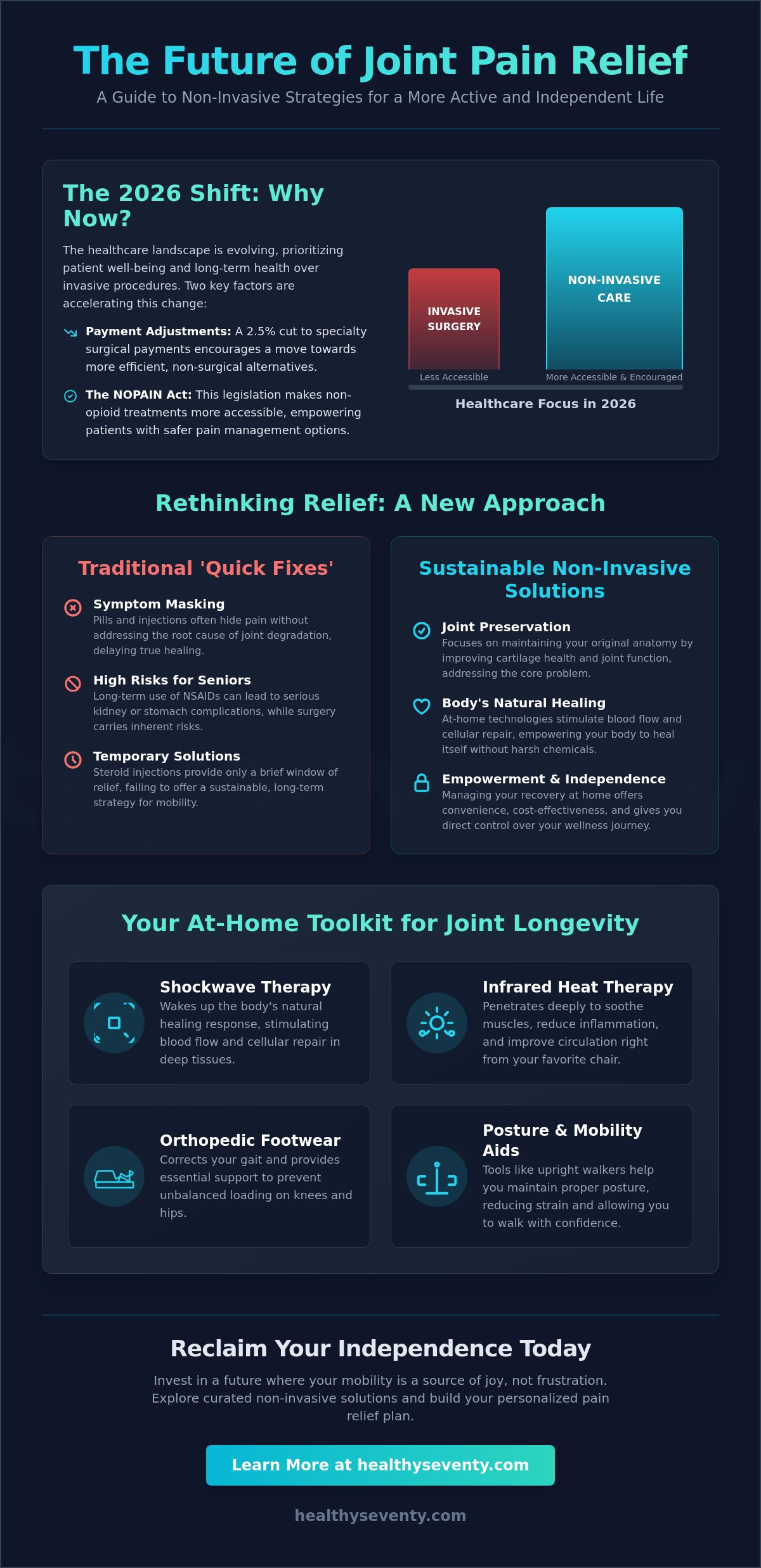
What if the key to your next afternoon in the park with your grandchildren wasn't found in a hospital wing, but right in your own living room? For many, the thought of a major operation is more than a little daunting, especially with the 2.5% efficiency adjustment cuts to specialty surgical payments that took effect in January 2026. You've likely felt the frustration of pills that only mask the symptoms or the nagging worry that your independence is slipping away one stiff step at a time. It's time to look toward non invasive joint pain relief as a viable, sophisticated alternative that respects your body and your time.
This guide promises to show you how to reclaim your active lifestyle and soothe chronic discomfort using the latest non-surgical therapies and lifestyle strategies tailored for your needs. We'll explore how the 2026 landscape has shifted with the NOPAIN Act, making non-opioid treatments more accessible than ever before. You'll discover a layered ecosystem of at-home technology like shockwave therapy, supportive gear such as orthopedic sneakers, and mindful habits designed to keep you moving with confidence. Let's start the journey toward a more vibrant, pain-free chapter of your life.
Key Takeaways
Learn why 2026 is a landmark year for non invasive joint pain relief as new technologies offer effective, gentle alternatives to traditional surgery.
Discover how at-home breakthroughs like shockwave and infrared heat therapy can target deep tissue discomfort right from the comfort of your favorite chair.
Understand how correcting your gait with specialized orthopedic footwear can prevent the unbalanced loading that often leads to chronic knee and hip pain.
Find out how to build a personalized mobility plan by identifying your unique pain triggers and implementing a foundation-first approach to wellness.
See how posture-focused tools, such as the VOCIC Upright Walker, can help you walk with confidence and keep your focus on the joy of movement.
Table of Contents
Understanding Non-Invasive Joint Pain Relief: Why Surgery Isn't Your Only Path
Choosing non invasive joint pain relief means opting for a path that honors your body's natural resilience. By definition, these therapies include any treatment that avoids surgical incisions, general anesthesia, or significant tissue trauma. It's a choice driven by a desire for safety and a quicker return to what matters most, like gardening or walking with your family. In 2026, the landscape has changed significantly. With the implementation of the 2.5% efficiency adjustment cutting payments for many specialty surgeries, the focus has shifted toward effective, sophisticated outpatient care that you can often manage from the comfort of home.
Rather than viewing your joints as mechanical parts that eventually break and need replacing, it's more empowering to see joint health as a journey of consistent maintenance. Just as we nurture a garden or maintain a cherished home, our knees and hips require gentle, proactive care to stay functional. This shift in perspective is vital. It removes the fear of an inevitable hospital stay and focuses on the vitality you can preserve today through modern technology and smarter lifestyle choices.
The Shift Toward Regenerative and Restorative Care
The medical community is increasingly moving toward 'joint preservation,' a philosophy that prioritizes keeping your original anatomy functional for as long as possible. Understanding Arthritis is the first step in recognizing how inflammation affects your movement and why managing the joint environment is better than simply masking the symptoms. When discomfort causes you to move less, your muscles weaken, which then increases the strain on your joints. This is the 'Pain-Mobility Cycle,' and breaking it requires active support that restores your confidence to move without the risks of a major operation.
Joint preservation is a proactive approach to maintaining the integrity of cartilage and the health of joint fluid to prevent further degradation.
The Limitations of Traditional 'Quick Fixes'
Many people have reached for traditional remedies out of habit, but these 'quick fixes' often come with hidden costs that become more apparent as we age. Relying on these methods can delay the adoption of more sustainable strategies that support long-term independence. Consider the following limitations:
NSAID Risks: Long-term use of anti-inflammatory pills can lead to serious kidney or stomach complications for seniors.
Temporary Bridges: Steroid injections might offer a brief window of relief, but they don't address the underlying wear and tear.
Symptom Masking: Pills often hide the pain without improving the actual health or lubrication of the joint.
By moving beyond these temporary measures, you're not just avoiding a hospital stay; you're investing in a future where your mobility is a source of joy rather than a point of frustration.
Modern Technology for At-Home Relief: From Infrared to Shockwave Therapy
The era of traveling to a clinical setting for every treatment is fading. In 2026, the most significant advancements in non invasive joint pain relief are happening right in the comfort of your own living room. These technologies aren't just gadgets; they're sophisticated tools that empower you to take charge of your recovery. By incorporating non-invasive pain relief techniques into your daily routine, you provide your body with the consistency it needs to heal. Owning these devices is often more cost-effective than repeated clinic visits, and it removes the stress of scheduling and transportation.
Modern at-home technology works by stimulating your body's natural healing responses. Instead of relying on external chemicals, these tools encourage increased blood flow and cellular repair. This biological boost helps reduce systemic inflammation and restores the vitality of your joint tissues over time; you can also learn more about how molecular hydrogen technology supports this internal recovery process.
Shockwave Therapy: Waking Up the Body’s Healing Response
Shockwave therapy has emerged as a breakthrough for those dealing with stubborn, chronic issues. This technology uses high-energy acoustic waves to create a therapeutic "micro-trauma" in the affected area. This sounds intimidating, but it's actually a gentle way to signal your body to restart the repair process without causing real injury. It's particularly effective for common senior challenges like plantar fasciitis and hip bursitis, where circulation is often limited. A dedicated Shockwave Therapy Device for Pain Relief allows you to apply this professional-grade technology to your heels or hips whenever you feel stiffness creeping in.
Infrared Heat: Deep Relief Beyond the Surface
Traditional heating pads only warm the very top layer of your skin. Infrared heat is different. It uses light waves to penetrate deep into your muscles and joints, reaching the areas where tension and stiffness truly live. This deep-penetrating warmth is a game-changer for morning stiffness, as it helps dilate blood vessels and deliver fresh oxygen to tired tissues. For a more holistic approach, a Home Infrared Sauna offers systemic relief. It treats your entire body at once, helping to lower overall inflammation and promote deep relaxation after a day of activity.
Establishing a home-based recovery station is a practical way to maintain your independence and stay active. You can discover more about these advanced wellness tools designed specifically to support your journey toward lasting comfort.
The Role of Movement and Supportive Gear in Joint Longevity
Movement is often the most effective form of non invasive joint pain relief, yet many of us hesitate to stay active when every step feels uncertain. The key to lasting comfort lies in how we distribute our weight during daily activities. When your gait is slightly off, it creates what experts call "unbalanced loading" on your knees and hips. This means one side of your joint bears more stress than it was designed to handle, which can lead to accelerated wear. By addressing the way you walk and stand, you aren't just managing discomfort; you're actively preserving your joints for the future.
Modern mobility aids and specialized gear have evolved beyond simple assistance. Today, these tools are designed to correct your posture and improve your biological alignment. The goal is to make movement feel natural again. After all, the best exercise for your joints is the one you can actually do consistently. When you have a stable foundation, you're more likely to stay engaged with your community and keep your body in motion.
Orthopedic Footwear: The Foundation of Pain-Free Movement
The journey to better mobility starts from the ground up. Your feet are the foundation for your entire skeletal structure, and even minor misalignments there can cause pain in your back or knees. High-quality arch support and targeted cushioning work together to absorb the shock of each step. This significantly reduces the impact traveling up through your legs. Beyond simple comfort, "sneakers for balance" are essential for maintaining your confidence and preventing falls. Orthofeet Orthopedic Walking Sneakers provide the necessary stability for aging feet, ensuring each step is secure and supported.
Upright Walkers: Reclaiming Posture to Reduce Pain
Traditional walkers often force you into a hunched position, which puts unnecessary pressure on your lower back and neck. Upright walkers offer a distinct mechanical advantage by allowing you to stand tall. This shift moves your weight off your spine and redistributes it more evenly onto your core and arms. For those looking to dive deeper into how these tools can transform your daily life, the comprehensive guide to upright walkers offers valuable insights into regaining your posture. Utilizing a VOCIC Upright Walker for Seniors ensures you maintain an eye-level connection with the world while protecting your long-term joint health. This proactive approach is a cornerstone of non invasive joint pain relief, helping you stay active without the fear of overexertion.
Creating Your Personalized Non-Invasive Pain Management Strategy
Crafting a personal strategy for non invasive joint pain relief is about more than just reacting to discomfort. It's about building a layered system that supports your body from multiple angles. When you take the lead in your own wellness journey, you move from a place of frustration to one of empowerment. This transition happens through small, intentional steps that add up to significant changes in how you feel each day. You don't have to change everything at once. Start with a few manageable adjustments and build your momentum over time.
Your first step is to identify the primary triggers of your discomfort. Is it the damp weather or perhaps a specific time of day? Once you understand these patterns, you can implement a "Foundation First" approach. This starts with the basics of skeletal stability and cellular hydration. From there, you can integrate technology for active recovery. Using infrared light or shockwave therapy during your most vulnerable hours can prevent a minor ache from becoming a day-long hurdle. Finally, layer in low-impact movement and monitor your progress through Vitality Milestones. Celebrate those moments when you walk a block further or stand with more ease than you did last month.
The Importance of Anti-Inflammatory Nutrition and Hydration
Good joint health starts at the cellular level. Water is the primary component of the synovial fluid that lubricates your joints, making hydration a non-negotiable part of your strategy. However, the purity of that water is just as critical as the amount you drink. A Countertop Reverse Osmosis Water Filter removes impurities that might otherwise contribute to systemic inflammation, ensuring your body has the cleanest resources for repair; additionally, you can discover ITAMILANO for premium shower filtration systems that protect your skin and body from harsh chemicals during your recovery routine. Supporting this with a diet rich in Omega-3 fatty acids and Collagen provides the essential nutrients your cartilage needs to maintain its cushioning properties.
When to Consult a Professional
Empowerment doesn't mean going it alone. There are times when non invasive joint pain relief methods should serve as a support to medical intervention rather than the primary solution. If you notice "red flag" symptoms like sudden, intense swelling or an inability to move a joint at all, consult a healthcare provider immediately. When you do speak with a professional, be proactive. Ask specifically about how at-home therapeutic options can fit into your recovery. Physical therapy is an excellent partner in this journey, as a therapist can help you refine your movements to ensure you're getting the most out of your supportive gear.
Ready to take the next step in your mobility journey? You can explore our full range of curated wellness tools to build a strategy that works for you.
Reclaiming Your Independence with Healthy Seventy’s Curated Solutions
Finding the right path to long-term comfort shouldn't feel like a full-time job. We believe that your energy is better spent on the activities you love rather than scouring endless websites for the latest non invasive joint pain relief breakthroughs. Healthy Seventy acts as your dedicated research partner, sifting through the noise to bring you only the most reliable and effective tools available in 2026. Our goal is to provide you with the clarity needed to make informed choices that respect your body and your lifestyle.
Our selection of shockwave and infrared tools represents the gold standard for at-home care today. These aren't generic solutions; they're sophisticated technologies once reserved for elite clinics, now adapted for your personal use. For those who prioritize posture as much as mobility, the VOCIC Upright Walker for Seniors is a transformative choice. It helps you stay upright and engaged with your surroundings, ensuring that your independence remains a central part of your daily experience. We also invite you to join our community forum, where you can share your success stories and connect with others who are reclaiming their vitality through non-surgical means.
Why Trust Our Curation?
Every product we recommend undergoes a rigorous review process focused on senior-specific ergonomics and ease of use. We don't just look for high ratings; we look for tools that genuinely support our core values of Vitality, Clarity, and Legacy. Our commitment is to help you age in place safely, surrounded by the comforts of home and the confidence of a well-supported body. We prioritize reliability so that you can trust every piece of gear to perform when you need it most. By focusing on quality over quantity, we ensure that your non invasive joint pain relief strategy is built on a foundation of trust.
Your Next Steps Toward a Pain-Free Future
A more active life doesn't require a radical overhaul overnight. It often begins with a single, small change that signals your commitment to your own well-being. Perhaps today is the day you check your current shoe wear or try a gentle heat wrap for that morning stiffness. If you're looking for more inspiration, our "Senior Wellness" article series offers in-depth tips on everything from hydration to holistic recovery. You have the power to change your trajectory, and we're here to walk alongside you every step of the way.
Take the first step today and explore our curated mobility and pain relief solutions to find the right fit for your journey.
Your Journey to Vibrant Mobility Starts Today
Reclaiming your active lifestyle doesn't require a hospital stay or a lengthy recovery period. By embracing non invasive joint pain relief, you're choosing a path of gentle restoration that respects your body's natural wisdom. We've explored how at-home breakthroughs like infrared heat and shockwave therapy can stimulate repair, while supportive gear like upright walkers and orthopedic sneakers provide the stable foundation you need to move with confidence. Every step you take toward better joint health is an investment in your independence and your future memories with loved ones.
Healthy Seventy is proud to have empowered thousands of seniors to regain their mobility through solutions expertly researched for the 60+ demographic. We focus exclusively on FDA-cleared and high-safety technologies, ensuring that every tool in our collection meets the highest standards of reliability. You don't have to navigate this transition alone. Our team has scoured the market to find the gold standard in wellness so you can focus on living your life to the fullest.
Discover our curated collection of senior wellness and pain relief tools and see how easy it is to start your personalized recovery plan. You've worked hard to reach this stage of life; it's time to enjoy it with the vitality and clarity you deserve.
Frequently Asked Questions
Is non-invasive joint pain relief as effective as surgery?
Non-invasive joint pain relief is often highly effective for managing symptoms and preserving function without the risks of surgery. While surgery is sometimes necessary for end-stage joint damage, many seniors find that a combination of technology and supportive gear allows them to maintain an active lifestyle indefinitely. It's about proactive maintenance. By focusing on joint preservation early on, you can often delay or entirely avoid the need for more aggressive hospital-based interventions.
Can I use shockwave therapy at home safely?
You can safely use shockwave therapy at home when you choose devices specifically designed and cleared for consumer use. These at-home versions typically use lower energy levels than professional clinical machines; this minimizes risk while still triggering the body's natural healing response. It's an excellent way to manage chronic issues like plantar fasciitis or tendon stiffness. Always follow the manufacturer's guidelines to ensure you're applying the therapy correctly for the best possible outcomes.
How long does it take to see results from infrared heat therapy?
Most people experience an immediate reduction in muscle stiffness and surface tension after just one session of infrared heat therapy. For deeper benefits related to chronic inflammation, you'll likely notice a more significant difference after consistent use over two to four weeks. This cumulative effect is why having a home infrared sauna is so beneficial. It allows for the regular, daily sessions needed to truly soothe your joints and improve overall circulation.
Will an upright walker really help my back and hip pain?
An upright walker is specifically designed to alleviate back and hip pain by correcting your standing posture. Traditional walkers often cause you to hunch forward, which places extreme stress on your lower spine and hip joints. By allowing you to stand tall, an upright walker redistributes your weight more evenly across your core and forearms. This mechanical shift reduces the unbalanced loading that often leads to increased discomfort during your daily walks.
Does insurance typically cover at-home joint relief devices?
Most private insurance plans and Medicare don't typically cover the full cost of consumer-grade at-home wellness devices. However, the landscape is shifting. Under the NOPAIN Act, which runs through December 2027, Medicare has expanded reimbursement for certain non-opioid pain management alternatives in clinical settings. It's always a wise idea to check with your specific provider to see if any of your therapeutic tools qualify for reimbursement through a Health Savings Account or Flexible Spending Account.
What is the best type of exercise for someone with severe joint stiffness?
Low-impact activities that move the joints through their full range of motion without heavy impact are best for severe stiffness. Swimming and water aerobics are excellent choices because the buoyancy of the water supports your weight, taking the pressure off your knees and hips. Specialized senior stretching or chair yoga can also help maintain flexibility. The goal is to keep the joints lubricated with synovial fluid through gentle, consistent movement that doesn't cause additional pain.
Are there any side effects to non-invasive joint treatments?
Side effects for these treatments are generally very mild and temporary compared to the risks associated with surgery or long-term medication use. You might experience slight skin redness after using infrared heat or some minor, temporary soreness following a shockwave therapy session. These are usually signs that your body's healing response has been activated. Because these methods don't involve incisions or systemic drugs, the recovery time for the treatment itself is virtually non-existent.
How do I know if my joint pain is too advanced for non-surgical options?
Your joint pain might be too advanced for non-surgical options if you experience bone-on-bone grinding, significant joint instability, or pain that keeps you awake at night despite treatment. If your mobility is so limited that you can't perform basic daily tasks, it's time to consult a medical professional. They can help determine if you've reached a stage where non invasive joint pain relief should be a secondary support rather than your primary strategy for wellness.


Comments