


Best Walking Sneakers for Balance: A 2026 Guide to Stability and Fall Prevention
Updated: Sep 16

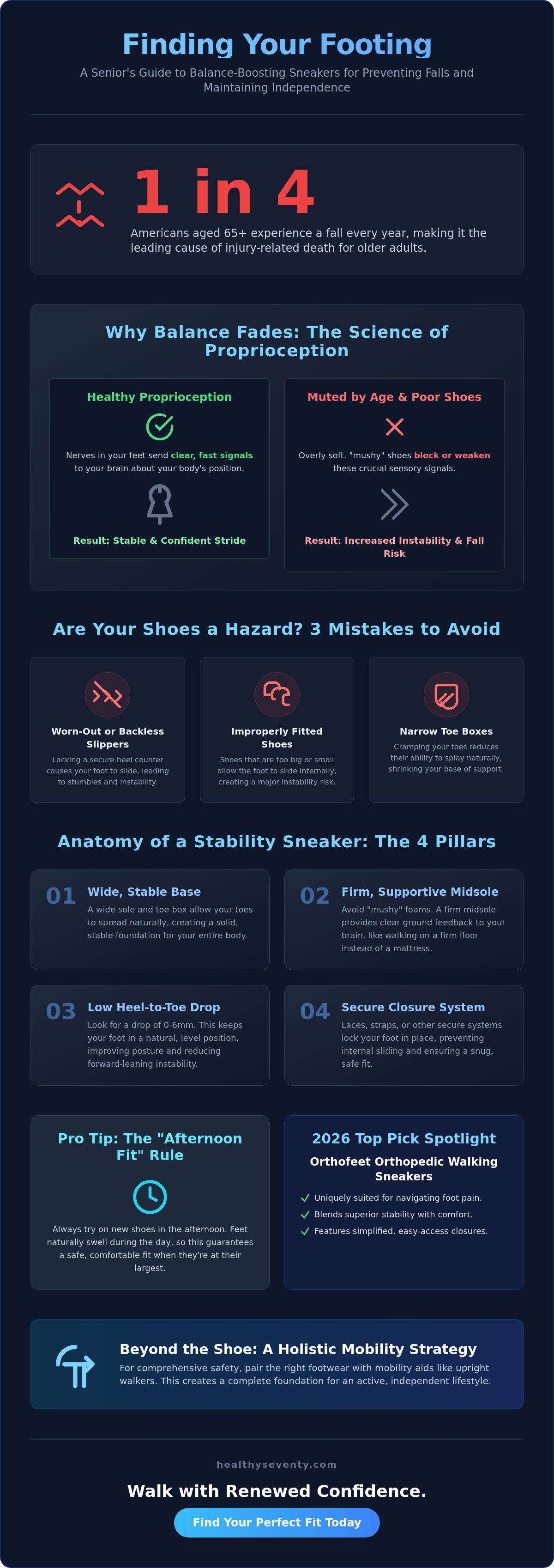
Did you know that one in four Americans aged 65 and older experiences a fall every single year? According to the CDC, these incidents are the leading cause of injury-related death for older adults, often resulting from a simple loss of stability. If you have found yourself feeling hesitant on uneven surfaces or struggling with the persistent discomfort of neuropathy and arthritis, it is completely natural to feel a bit less "planted" than you once did. Finding the best walking sneakers for balance is about more than just comfort; it is a proactive step toward maintaining your safety and your cherished independence.
We believe that your later years should be a time of vitality, not a time defined by the fear of a trip or stumble. You deserve footwear that acts as a reliable bridge between your body and the ground, providing the sensory feedback necessary for a confident stride. In this 2026 guide, we will explore the most stable footwear options designed to reduce foot fatigue and simplify your daily routine. We will preview the latest innovations in slip-resistance and easy-access designs, helping you walk with a renewed sense of security and grace.
Key Takeaways
Understand how specific design features enhance your body's natural awareness, so you'll feel more secure with every step.
Identify the four technical pillars of the best walking sneakers for balance, from a wide, stable base to a firm, supportive midsole.
Discover why Orthofeet Orthopedic Walking Sneakers are uniquely suited for those navigating foot pain, offering a blend of stability and simplified closures.
Learn the "Afternoon Fit" rule to guarantee your shoes remain comfortable and safe even when your feet naturally swell during the day.
See how pairing the right footwear with mobility aids like upright walkers can create a comprehensive foundation for an active, independent lifestyle.
Table of Contents
The Critical Link Between Footwear and Senior Fall Prevention
When we discuss home safety, we often think about grab bars in the bathroom or removing loose rugs from the hallway. While these are vital steps, your first line of defense actually begins with what you put on your feet every morning. Balance-friendly footwear is specifically engineered to maximize ground contact and sensory feedback, acting as a stable platform for your entire body. Choosing the best walking sneakers for balance isn't just a matter of style; it's a decision to prioritize your independence and safety.
Traditional sneakers often prioritize excessive "mushy" cushioning, which might feel soft but can actually be quite dangerous. Think of it like trying to walk on a mattress versus a firm floor. That thick, unstable foam masks the texture of the ground, making it harder for your brain to react to slight changes in the surface. By selecting a shoe with a firmer midsole and a wider base, you create a more reliable connection to the world beneath you.
How Proprioception Changes with Age
The human body relies on a complex network of nerves in the feet to send constant updates to the brain about where we are in space. This process is essential for maintaining a steady human gait and adjusting to uneven pavement or sudden obstacles. As we age, these signals can become slightly muted, a change that directly impacts our sense of stability. Proprioception is the body's internal GPS that allows you to sense your position and movement without needing to look at your feet.
When you wear shoes with overly soft or thick soles, you're essentially "muting" the volume on these critical signals. Your brain needs clear, crisp data from the soles of your feet to keep you upright and confident. The best walking sneakers for balance are designed to protect your joints while still allowing those vital sensory messages to reach your brain's balance centers clearly and quickly.
The Most Common Shoe Mistakes Seniors Make
Many of us fall into habits that unknowingly compromise our stability. It's easy to overlook small details that have a big impact on our risk of tripping. Here are the most frequent mistakes we see:
Relying on worn-out slippers: Old slippers or "backless" shoes lack a secure heel counter, which can cause your foot to slide around and lead to a stumble.
Choosing "one size fits all" designs: Shoes that aren't properly fitted can cause blisters or, worse, leave your foot sliding inside the shoe, creating a major instability risk.
Narrow toe boxes: When your toes are cramped together, you lose your natural base of support. A wide toe box allows your toes to splay naturally, giving you a wider "footprint" for better balance.
By identifying these common pitfalls, you can begin to curate a footwear collection that supports your vitality rather than hindering it. Making a thoughtful change today can lead to years of confident, active living.
What to Look for in Sneakers for Improved Stability
Searching for the best walking sneakers for balance requires looking beyond the aesthetics of the shoe. While many brands focus on "maximal cushioning" to provide a cloud-like feel, too much soft foam can actually hinder your stability. To find a pair that truly supports your journey, you should focus on four specific pillars: a wide base, a firm midsole, a low heel-to-toe drop, and a secure closure system. These features work in harmony to ensure your foot remains stable from the moment your heel strikes the ground until your toes push off.
One of the most overlooked features is the "heel-to-toe drop," which refers to the height difference between the heel and the forefoot. Many traditional sneakers have a steep drop that pitches the body slightly forward, which can increase the risk of forward-leaning instability. Choosing a shoe with a low drop, typically between zero and six millimeters, keeps your foot in a more neutral, level position. This alignment allows for a more natural foundation for healthy movement, helping you maintain an upright posture without extra effort.
A wide toe box is equally essential. When your toes have the space to splay naturally, they create a wider base of support for your entire body. This isn't just about comfort for those with bunions or hammertoes; it's a structural necessity for balance. A shoe that cramps the toes forces you to rely on a narrower platform, making it harder to react to a sudden slip or a change in terrain.
The Anatomy of a Stable Sole
A stable sole should be wider at the bottom than it is at the top, a design known as a flared outsole. This "footprint" provides a larger surface area, much like the wide stance of a tripod, to prevent the foot from rolling inward or outward. You should also look for a stiff heel counter, which is the firm structure at the back of the shoe. A strong heel counter cradles the back of your foot, preventing the wobbles that often lead to ankle rolls. In 2026, look for slip-resistance ratings that specifically mention traction on indoor surfaces like wood or tile, as these are where most home-based falls occur.
Closures and Convenience: Beyond Traditional Laces
The way a shoe closes is just as important as how it's built. If arthritis or tremors make tying laces difficult, you shouldn't have to settle for a loose fit. A secure closure prevents your foot from sliding around inside the shoe, which is a major cause of trips. Modern innovations have introduced velcro straps, elastic toggles, and even "hands-free" entry technology. For example, Orthofeet Orthopedic Walking Sneakers often incorporate these adaptive features, allowing you to achieve a snug, safe fit without the frustration of traditional laces. This ensures your footwear stays perfectly positioned, providing the steady support you need for every step of your day.
Best Walking Sneakers for Balance: 2026 Top Picks
Choosing the right shoe is a deeply personal decision that depends on your unique foot shape and health history. We have researched the most reliable models available this year to help you find the best walking sneakers for balance. Whether you are managing arthritis or simply want to feel more secure on your daily walks, these curated selections prioritize stability without compromising on comfort or style.
Orthofeet Orthopedic Walking Sneakers: The Gold Standard
For those who require medical-grade support, Orthofeet Orthopedic Walking Sneakers are often considered the premier choice. These shoes are engineered with a unique anatomical arch support system that helps align your feet and legs, reducing the strain that can lead to instability. Their multi-layered cushioning system is firm enough to provide a stable "ground feel" while still absorbing the impact of every step.
Many seniors find the "Hands-Free" slip-on feature to be a life-changing innovation. It allows you to step into your shoes securely without the need to bend over or struggle with traditional laces, which is a significant benefit if you deal with limited mobility or tremors. You can explore the specific technical features and user experiences in our comprehensive Orthofeet review. These sneakers don't just protect your feet; they empower you to move with a renewed sense of confidence.
Top Stability Models from Mainstream Brands
Several well-known athletic brands have developed models that cater specifically to the needs of those seeking better balance. The Brooks Addiction Walker 2 remains a staple because of its "Extended Progressive Rollbar" technology. This firm support system acts as a guide for your foot, preventing the inward rolling that often causes stumbles. If you have severe joint pain but still need a reliable grip, the HOKA Bondi SR ($180) is an excellent choice. It provides a wide, stable base and a high-quality slip-resistant outsole that performs well on indoor surfaces like tile or wood.
We also highly recommend the New Balance 847 for its medical-grade stability and deep toe box. This design is particularly helpful for those who need extra room for bunions or custom orthotics. To help you narrow down your search, consider these specialized picks:
Best for Neuropathy: The Altra Experience Flow 3 ($145) offers a zero-drop platform. This level design maximizes your sensory connection to the ground, which is vital if you have reduced sensation in your feet.
Best for Wide Feet: The New Balance 847 is available in multiple widths, ensuring a snug heel fit while allowing your toes to splay naturally for a wider base of support.
Best Budget: The Asics Gel-Contend 9 ($75) provides essential rearfoot stability and a durable midsole at a price point that is accessible for most budgets.
By matching these specific models to your personal needs, you can create a safer environment for your daily activities. The right shoe acts as your partner in maintaining an active and independent lifestyle.
How to Test and Fit Your New Balance Shoes at Home
Securing the best walking sneakers for balance is a significant first step, but the final measure of safety depends on how that shoe interacts with your specific foot shape. A shoe that is technically stable but poorly fitted can become a liability rather than an asset. To ensure your new footwear provides the security you deserve, we recommend a methodical approach to testing them within the safety of your own home, ideally on a carpeted surface where you can move freely without scuffing the soles.
The most critical rule of thumb is the "Afternoon Fit" rule. Did you know your feet actually change size throughout the day? As you move and stand, gravity and circulation cause your feet to swell slightly; this means a shoe that fits perfectly at 8:00 AM might feel like a vice by dinner time. Always try on your new sneakers in the late afternoon or evening to ensure they remain comfortable even at their maximum volume. If you use custom orthotics or prescribed inserts, make sure to swap them into the new shoes immediately, as these will significantly alter the internal space and the way your heel sits in the cup.
Once the shoes are on, perform the "Wiggle Test." You should have about half an inch of space, roughly the width of your thumb, between your longest toe and the end of the shoe. This prevents your toes from jamming during downhill walks. Next, check the "Heel Lock" by walking naturally around the room. If your heel lifts or slides even slightly, the shoe is not secure enough to prevent a stumble. If you're ready to find a pair that offers this level of precision, explore our curated stability footwear options designed specifically for senior safety.
Signs of a Poor Fit (And When to Return Them)
Many people mistakenly believe they need to suffer through a few weeks of discomfort to "break in" a new pair. In reality, a stability shoe should feel supportive and "planted" from the very first step. If you feel the "Pinky Toe Pinch," it is a clear sign the toe box is too narrow, which will eventually cramp your natural base of support. Persistent heel slippage is another red flag; it creates friction that leads to blisters and, more importantly, indicates that your foot isn't properly synced with the shoe's stability features. If it doesn't feel right in your living room, it won't feel right on the sidewalk.
When to Replace Your Walking Shoes
Even the best walking sneakers for balance have a shelf life. For those who walk daily, the "6-Month Rule" is a helpful benchmark for maintaining midsole integrity. Over time, the specialized foam that provides ground feedback and joint protection compresses and loses its "bounce." You can often spot the need for replacement by looking at the outsoles. If the tread is worn more heavily on one side, it creates an uneven platform that can pull your gait off-center and increase your risk of a fall. Regularly checking for these visual cues ensures your footwear continues to act as a reliable partner in your mobility strategy.
Maintaining Independence with a Holistic Mobility Strategy
True freedom in our later years isn't the result of a single purchase; it's the outcome of a thoughtful, proactive approach to daily life. While finding the best walking sneakers for balance is a vital cornerstone of safety, these shoes work best when they're part of a broader "active aging" toolkit. This strategy blends physical support with intentional habits, ensuring you can navigate your world with clarity and confidence. By viewing your footwear as the foundation of your movement, you empower yourself to maintain the lifestyle you've worked so hard to build.
A holistic approach means looking at how different tools work together to support your body. It's not just about preventing a fall; it's about optimizing your vitality so that you can stay engaged with your family, your hobbies, and your community. When you prioritize a stable ground connection, you're making a choice to honor your body's wisdom and experience. This proactive mindset transforms home safety from a list of chores into a rewarding journey toward sustained independence.
Footwear and Upright Walkers: The Perfect Pair
When you use a mobility aid, your footwear acts as the critical interface between your body and the ground. If your shoes are unstable or lack grip, even the most advanced device can't fully compensate for a shaky foundation. For instance, pairing the best walking sneakers for balance with a VOCIC Upright Walker Guide creates a synergy that promotes better posture and a more natural stride. The walker provides the upper-body stability, while your shoes ensure your feet are "planted" and secure.
We also find that addressing the underlying discomfort through non-invasive joint pain relief can make every walk feel like an opportunity for joy rather than a chore to be endured. When your feet are comfortable and your joints are supported, you're more likely to stay active, which in turn strengthens your muscles and naturally improves your balance. This virtuous cycle of movement is the heart of a successful mobility strategy.
Your Next Steps to Safer Walking
Taking charge of your mobility is an empowering choice that honors your legacy of independence. As you move forward, keep this final checklist in mind to ensure you're getting the most out of your efforts:
Consult a professional: Speak with a podiatrist to understand your specific arch type and gait pattern.
Measure regularly: Have your feet measured at least once a year, as foot shape can change with age and health conditions.
Choose stability: Always prioritize a wide base and firm midsole over "maximal" soft cushioning.
Embrace movement: Complement your new shoes with gentle strength and balance exercises suggested by your healthcare provider.
The joy of independent movement is one of life's greatest treasures. At Healthy Seventy, we're dedicated to acting as your knowledgeable mentor, providing the curated health resources you need to walk with renewed strength. We invite you to explore our curated shop and resources to find the best in senior mobility and wellness. Your journey toward a safer, more active lifestyle starts with a single, stable step.
Step Forward with Renewed Confidence
Your journey toward safer walking starts with understanding that footwear is more than just an accessory; it's a vital tool for your independence. By prioritizing technical features like a wide base and firm midsole over excessive cushioning, you ensure your brain receives the clear sensory feedback it needs to keep you upright. Remember to apply the afternoon fit rule and look for adaptive closures that make daily wear a pleasure rather than a chore. Selecting the best walking sneakers for balance is a significant investment in your safety and long-term vitality.
Healthy Seventy is dedicated to providing expert-reviewed wellness advice and curated products specifically for adults aged 60 and older. Our focus remains centered on fall prevention and helping you maintain your cherished independence through every stage of life. If you're ready to find a pair that truly supports your unique needs, explore our curated selection of senior-friendly walking shoes today. You've spent a lifetime moving forward; let's ensure your next steps are as steady and secure as they can be.
Frequently Asked Questions
Can the right shoes really improve my balance?
Yes, the right footwear significantly improves your balance by providing a stable platform and enhancing your body's ability to sense the ground. Shoes designed for stability help align your feet and ankles, which reduces the micro-wobbles that can lead to a stumble. By choosing the best walking sneakers for balance, you ensure your brain receives clear signals from your feet, allowing for much quicker reactions to uneven surfaces.
Are slip-on sneakers safe for seniors with balance issues?
Slip-on sneakers are safe as long as they feature a firm heel counter and a secure, non-slip fit. Modern designs, such as those from Orthofeet, use advanced technology to allow you to step in without bending over while still keeping the foot perfectly positioned. It's essential to avoid "backless" styles or loose-fitting slippers. Those can slide off easily and create a major trip hazard during your daily activities.
Should I choose soft or firm soles for the best stability?
Firm soles are the superior choice for maintaining stability and preventing falls. While soft, mushy foam may feel comfortable initially, it creates an unstable surface that masks the texture of the ground. A firmer midsole provides the consistent support needed to keep your gait steady. It ensures your feet don't roll inward or outward unexpectedly, which is vital for staying confident on your feet.
How often should I replace my walking sneakers to ensure safety?
You should replace your walking shoes every six months if you walk daily, or after approximately 300 to 500 miles. Even if the outside looks clean, the internal support structures and cushioning materials break down over time. Compressed foam loses its ability to absorb shock and provide reliable feedback. This breakdown can quietly compromise your balance and joint health before you even notice the wear.
Do I need a wide toe box if I don’t have bunions?
Yes, a wide toe box is essential for balance regardless of whether you have bunions or other foot conditions. Allowing your toes to splay naturally creates a wider base of support, much like the roots of a tree. This increased surface area helps you stay planted on the ground. It improves your overall stability, especially when you are navigating turns or walking on uneven pavement.
What is "heel-to-toe drop" and why does it matter for seniors?
Heel-to-toe drop is the difference in height between the heel of the shoe and the front of the shoe. For seniors, a lower drop is often safer because it keeps the foot in a neutral, level position. This prevents your body from being pitched slightly forward. Staying level reduces the strain on your lower back and helps prevent the forward-leaning instability that can lead to falls.
Can I use my custom orthotics in these stability sneakers?
Most high-quality stability sneakers are designed with removable insoles to accommodate custom orthotics. It's important to ensure the shoe has enough depth to hold the insert without pushing your heel too high out of the shoe. When testing the best walking sneakers for balance, always bring your orthotics with you to ensure a seamless and secure fit that supports your specific needs.
Is it better to walk barefoot or in sneakers at home for balance?
Walking in supportive sneakers or dedicated indoor shoes is generally safer than going barefoot at home. While being barefoot provides sensory feedback, it offers no protection against slips on wood or tile and lacks necessary arch support. A clean pair of stability shoes used only indoors provides the traction and structural support required to prevent household falls and keep your feet comfortable.


Comments