


Posture Correction for Seniors: Reclaiming Your Vitality and Alignment in 2026

What if the stooped shoulders and persistent back pain you've accepted as part of aging aren't actually permanent? Many people ask if it's truly too late to reclaim their alignment after seventy or eighty years of life. You might feel that a shifted center of gravity is an inevitable risk for falls, or perhaps "tech neck" from staying connected with grandkids has left you feeling stiff and less confident in social circles. It's natural to feel frustrated when your physical frame doesn't match the inner vitality you still possess. Posture correction for seniors is about more than just looking better; it's about reclaiming your independence and your ability to breathe deeply.
This article shows you how a holistic approach can reverse that stooped appearance and restore your confidence. In 2026, we know that spinal health requires a blend of muscular reawakening, neurological awareness, and the strategic use of supportive technology. We'll explore how to reduce chronic pain and help you identify which modern tools, such as specialized Orthofeet sneakers or upright walkers, actually provide support rather than just being gimmicks. We are going to preview the latest exercises and ergonomic shifts that will help you stand taller and feel more energetic every single day.
Key Takeaways
Discover why 2026 is the year of "Active Alignment" and how intentional spine realignment can help reverse age-related stooping for a more youthful profile.
Learn about "Sensory Motor Amnesia" and how to retrain your brain to recognize true vertical alignment rather than a habitual, comfortable hunch.
Master a safe, 10-minute morning sequence designed specifically for posture correction for seniors to boost your daily energy and improve your balance.
Identify hidden posture traps in your living room, like overly soft sofas, and learn how to create a senior-friendly reading station that supports your spine.
Explore how modern postural bracing tools, such as the VOCIC Upright Walker, provide a revolutionary alternative to traditional rollators for maintaining a tall horizon.
Table of Contents
Understanding Posture Correction for Seniors: More Than Just Standing Tall
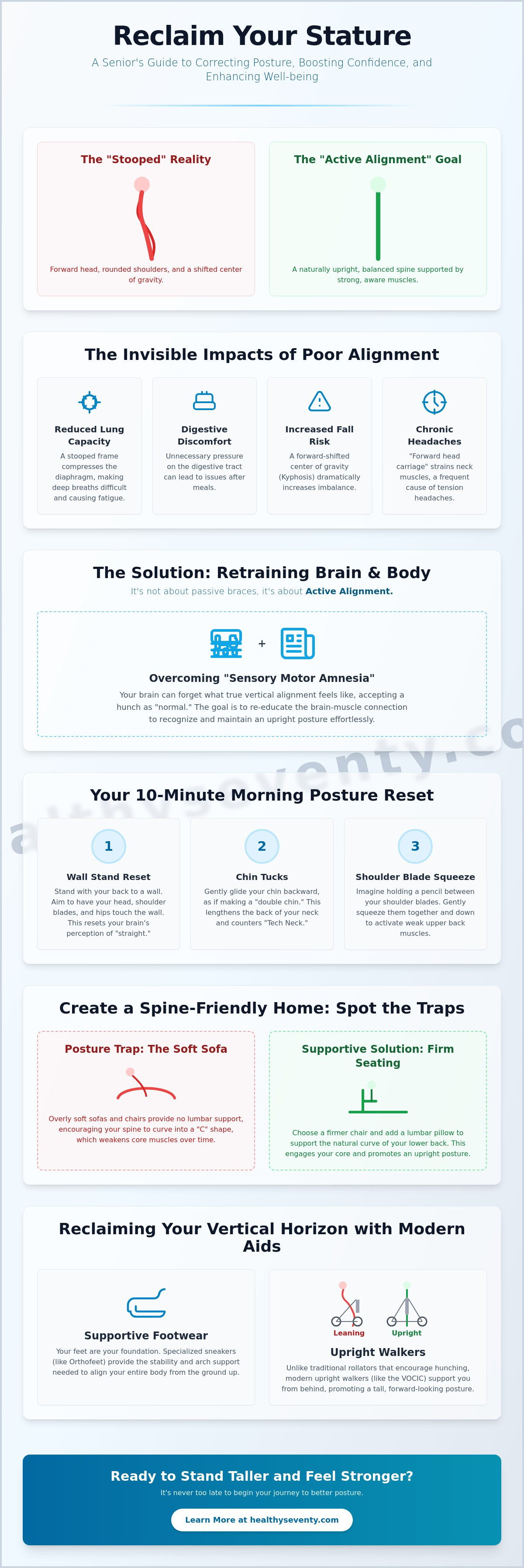
Posture correction for seniors is often misunderstood as a simple aesthetic fix or a reminder to "sit up straight." In reality, it's a sophisticated process of intentional spinal realignment and the strengthening of the deep muscles that support your frame. In 2026, we've entered the era of "Active Alignment." This scientific approach shifts away from passive braces and focuses on retraining the body and brain to work together. It's a proactive way to reclaim the space your body was meant to occupy, ensuring you don't just age, but age with grace and strength.
Beyond the spine, your posture dictates how your internal organs function. A stooped frame compresses the diaphragm, which can reduce lung capacity and leave you feeling breathless or fatigued during simple walks. It also puts unnecessary pressure on the digestive tract, potentially leading to discomfort after meals. Transitioning from a mindset of "inevitable aging" to one of proactive wellness allows you to see your body as a dynamic system. You have the power to influence your health through small, daily adjustments that favor alignment over collapse.
The Invisible Impact of Poor Alignment
Poor alignment has consequences that aren't always obvious until they affect your daily safety. When your upper back rounds, a condition often referred to as Understanding Kyphosis, your center of gravity shifts forward. This change significantly increases the risk of falls because your balance is no longer centered over your feet. Additionally, "forward head carriage" strains the delicate muscles of the neck, frequently causing chronic tension headaches that many seniors mistake for simple fatigue. Standing tall changes how you feel when entering a room, replacing hesitation with a quiet sense of belonging and confidence.
Why It Is Never Too Late to Start
Many believe that by your 70s or 80s, your spine is "set in stone." This is a common myth that prevents many from seeking help. While bone density changes over time, the concept of spinal plasticity remains relevant throughout your life. Your muscles and connective tissues can still be retrained to support a more upright position through consistent posture correction for seniors. We've seen many individuals regain lost height simply by correcting habitual slumping and engaging their core muscles. It isn't about achieving a "perfect" spine; it's about progress. Small, consistent improvements in your daily alignment lead to a significant reduction in chronic pain and a renewed sense of vitality.
The Anatomy of the 'Stooped' Shift: Why We Change as We Age
As we move through our later years, the physical changes in our spine can feel like a slow, inevitable tide. Vertebral compression occurs as the fluid-filled discs between our bones naturally thin, while changes in bone density can alter the very shape of our vertebrae. However, the "stooped" look isn't purely a result of bone structure. Your brain is an expert at adaptation, but sometimes it learns the wrong lessons. This is known as Sensory Motor Amnesia; it's a state where your brain loses the ability to feel certain muscles, eventually tricking you into thinking a hunch is actually "straight."
Our modern lifestyle often accelerates this shift. A sedentary routine causes the "posterior chain," the muscles running along your back and hamstrings, to grow weak and lengthened. Simultaneously, "Tech Neck" has emerged as a genuine health crisis for seniors in the digital age. Spending hours looking down at tablets or smartphones adds immense pressure to the cervical spine. The journey toward effective posture correction for seniors begins with understanding that your body is a master of adaptation, and it can be retrained to find its center again.
Kyphosis vs. Slouching: Knowing the Difference
It is vital to distinguish between a temporary slouch and hyperkyphosis, often called a "dowager's hump." While slouching is a habit, hyperkyphosis is a clinical curvature of the upper spine that may require more focused intervention. According to Harvard Health on posture, lifestyle habits are often the primary culprits behind a rounded back, but they can be addressed through awareness. You can perform a simple "Wall Test" at home to check your alignment:
Stand with your back against a flat wall, keeping your heels about three inches from the baseboard.
Your buttocks and shoulder blades should touch the wall comfortably.
Check if the back of your head touches the wall without tilting your chin up or straining.
If your head remains inches away from the wall, it's a sign that your spinal curvature has progressed. If you experience sharp pain, numbness, or a sudden loss of height, consulting a specialist is a wise next step.
The Role of Core Stability in Spinal Support
Core strength for seniors isn't about achieving a "six-pack"; it's about creating an internal corset that provides spinal bracing. When your core is weak, your spine collapses under the weight of gravity. This weakness is often linked to tight hip flexors, which tilt the pelvis forward and force the upper back to round in compensation. Learning how non invasive joint pain relief can make movement easier is a key part of this process. By reducing discomfort, you can engage in the exercises necessary to strengthen these vital support systems. Choosing supportive footwear like Orthofeet Orthopedic Walking Sneakers can also provide the stable foundation your spine needs. By focusing on these anatomical foundations, posture correction for seniors becomes a manageable, daily practice rather than an uphill battle.
Reawakening Your Frame: A Daily Routine for Senior Posture
How do you begin your morning? For many, the first few minutes after waking are spent shaking off stiffness. Instead of rushing into your day, consider a ten-minute "Alignment Awakening" sequence. This routine isn't about intense exertion; it's about gently reminding your body where it belongs in space. Consistency is your greatest ally here. Engaging in five minutes of movement twice a day is far more effective for posture correction for seniors than a single, exhausting hour once a week. Short, frequent sessions keep your nervous system engaged and prevent your muscles from defaulting back to a slumped position.
Before you even move, focus on your breath. Diaphragmatic breathing helps "inflate" the spine from within, creating natural space between your vertebrae. As you inhale deeply into your belly, imagine your spine lengthening toward the ceiling. This simple act provides a foundational layer of support for the movements that follow. For a comprehensive look at how these habits impact your long-term health, the Guide to Good Posture from MedlinePlus offers excellent foundational advice for maintaining spinal integrity through daily awareness.
Gentle Movements to Open the Chest and Shoulders
To reverse the pull of rounded shoulders, try the Doorway Stretch. Stand in a sturdy door frame, place your forearms on the sides of the frame with elbows at shoulder height, and gently lean forward until you feel a comfortable opening in your chest. Hold this for thirty seconds. If you prefer to stay seated, Scapular Retractions are highly effective. Sit tall in a firm chair and gently squeeze your shoulder blades together as if you're trying to hold a pencil between them. The Chin Tuck serves as the daily antidote to the strain of tech neck by realigning the cervical spine with the shoulders.
Strengthening the Posterior Chain
A strong back requires a stable base. Glute bridges are wonderful for pelvic alignment; lie on your back with knees bent and feet flat, then gently lift your hips toward the ceiling. This engages the glutes and supports the lower back. For those concerned about balance, a modified Bird-Dog can be done while holding onto a sturdy table, extending one leg at a time to find stability. Finally, the Wall Slide is the ultimate tool for upper back strength. Stand with your back against a wall and slowly slide your arms up and down in a "Y" shape, keeping your elbows and wrists in contact with the surface. These small victories in movement build the foundation for a more vibrant, upright life.
The Ergonomic Home: Adjusting Your Environment for Better Alignment
Your home should be a sanctuary that supports your health, yet it often hides subtle "posture traps." The most common offender is the soft, deep-seated sofa. While these couches feel inviting, they encourage a passive collapse of the spine, making it difficult to maintain the "Active Alignment" we discussed earlier. To achieve effective posture correction for seniors, you must look at your furniture as a tool for health rather than just a place to rest. Consider adding a firm lumbar pillow to your favorite chair to keep your lower back supported and your chest open.
Spinal stacking actually begins at your feet. If your foundation is unstable or lacks support, your entire frame will compensate by tilting or leaning. Wearing high-quality walking sneakers for balance even while indoors provides the arch support and heel stability necessary to keep your pelvis in a neutral position. Sleep ergonomics are equally vital. Your pillow loft should maintain the natural curve of your neck; if your pillow is too high or too flat, you're spending eight hours a day undoing the progress you've made. Aim for a height that keeps your nose in line with your sternum when you lie on your side.
Kitchen and Dining Room Adjustments
Kitchen counters are rarely designed with ergonomics in mind. Many seniors find themselves hunching over to chop vegetables or wash dishes. You can create an "Anti-Slouch" prep station by using a tall, sturdy cutting board to bring the work closer to your eye level. In the dining room, avoid chairs that allow you to slump. Choose seating that encourages an active sit, where your feet are flat and your sit-bones are firmly supported. Practice the 20-minute rule. Stand up and reset your alignment after every meal to prevent your muscles from "locking" into a seated shape.
Lighting and Vision: The Surprising Link to Posture
Poor lighting is a hidden enemy of a tall spine. If your reading area is dim, you will naturally lean forward to see better, straining your neck and shoulders. This is often exacerbated by the "Bifocal Tilt." This happens when you tilt your head back to look through the bottom portion of your glasses, creating chronic tension in the back of the neck. Ensure your reading material or tablet is at eye level. Using a simple book stand can make a world of difference. To truly transform your home into a space of vitality, consider exploring Orthofeet Orthopedic Walking Sneakers to give your alignment the foundation it deserves.
Reclaiming Your Vertical Horizon: Modern Aids and Upright Support
Why do we often view mobility aids only as a last resort for the frail? In 2026, we're seeing a shift where these devices are used as a proactive way to approach posture correction for seniors. Think of them as "postural bracing" on wheels. High-quality aids don't just help you get from one room to another; they help you do it while standing tall and breathing deeply. Instead of waiting for a fall to occur, using the right support now can prevent the skeletal collapse that often leads to injuries.
The revolutionary design of modern upright walkers is a far cry from the clunky metal frames of the past. These devices shift your weight from your wrists to your padded forearms. When you make this change, you aren't just making walking easier; you're physically opening your chest and naturally straightening your back. This mechanical advantage is a cornerstone of modern posture correction for seniors. It allows the muscles between your shoulder blades to engage without the strain of carrying your full torso weight. By integrating lightweight mobility aids into your routine, you're protecting your spinal health during every social outing and afternoon stroll.
Why Traditional Walkers Can Sometimes Worsen Posture
Traditional rollators often lead to what experts call the "Hunch and Push" syndrome. Because the handles are typically set too low, users lean forward and look down at their feet to find stability. This habit reinforces the very stoop we're trying to reverse. Upright designs offer a different anatomical experience. By providing forearm support, they encourage you to look forward at the horizon rather than at the ground. This "eyes-up" position is critical for maintaining balance and rebuilding the confidence you need to stay active in social settings.
Integrating Technology for Real-Time Feedback
Modern technology offers even more ways to stay mindful of your alignment throughout the day. Wearable posture vibrators, which give a gentle buzz when you begin to slouch, are becoming more accessible and easier for seniors to use. Are they right for you? They can be a helpful reminder, but even your smartphone can act as a tracking tool with the right wellness apps. Your posture is a direct reflection of your inner vitality and the space you deserve to occupy. Nurture it with the same care you give any other part of your health. Standing tall is a journey, and with the right tools, your vertical horizon is well within reach.
Step Into a More Aligned and Energetic Future
Reclaiming your alignment is a journey of both the mind and the body. You've learned that your spine isn't fixed in place; it's a dynamic structure capable of positive change well into your eighties and beyond. By addressing sensory motor amnesia through daily routines and optimizing your home environment, you're taking proactive steps toward a more independent lifestyle. True posture correction for seniors combines these personal habits with expert-curated mobility solutions that support your frame rather than forcing it into a hunch. Our focus remains on your ability to breathe deeper, move easier, and feel more energetic in every social situation.
At Healthy Seventy, we are dedicated to providing research-backed wellness advice and tools specifically designed to foster senior independence. Whether you're adjusting your kitchen ergonomics or seeking a more supportive way to walk, every small change builds your confidence. It's time to look toward the horizon with clarity and strength. You have the power to influence how you feel today and in the years to come. Your journey toward better health is a significant phase of life that deserves to be cherished.
Discover how the VOCIC Upright Walker can help you stand tall again and reclaim the vitality you deserve. You've spent a lifetime building your legacy; now, stand tall to enjoy it.
Frequently Asked Questions
Can I really improve my posture at 75 or is it too late?
It is absolutely not too late to see meaningful improvements in your alignment. While your bone structure changes over time, your muscles and nervous system remain capable of learning new habits through spinal plasticity. By consistently practicing the routines we've discussed, you can retrain your body to find a more upright and comfortable position. Every small adjustment helps you reclaim your vitality and confidence at any age.
How long does it take to see results from posture exercises?
You'll likely feel an increase in your breathing capacity and a reduction in muscle tension within the first two weeks of daily practice. Visible changes in your physical profile usually take a bit longer, often appearing after eight to twelve weeks of dedication. Remember that posture correction for seniors is a gradual process of reawakening your frame. Focus on the steady progress of feeling lighter and more energetic each day.
Are posture corrector braces safe for seniors with osteoporosis?
Posture braces should be approached with care if you have been diagnosed with osteoporosis. While they can offer temporary support, some designs may put unintended pressure on fragile vertebrae or cause your support muscles to weaken through disuse. It's best to consult with a healthcare professional to see if a specific brace is appropriate for your condition. Focusing on active, low impact strengthening is often a more sustainable path to long term health.
What is the best sleeping position for a senior with a hunched back?
Sleeping on your back with a small pillow tucked under your knees is generally the best way to maintain a neutral spine. If you prefer sleeping on your side, place a firm pillow between your knees and ensure your head pillow keeps your neck aligned with your back. These positions prevent your spine from twisting or collapsing further during the night. Avoid sleeping on your stomach, as it forces your neck into a strained position.
Does an upright walker actually help straighten the spine?
An upright walker is a highly effective tool because it physically shifts your center of gravity. Traditional walkers often encourage a "hunch and push" habit, but upright designs use forearm supports to keep your chest open and your gaze forward. This mechanical advantage serves as a form of active posture correction for seniors by allowing you to walk with a straight back. It's a practical way to stay mobile while protecting your spinal alignment.
Can poor posture cause breathing difficulties in older adults?
Yes, a stooped frame can significantly impact your lung capacity by compressing your diaphragm and rib cage. When you hunch forward, your lungs don't have the necessary space to expand fully, which often leads to shallow breathing and persistent fatigue. Improving your posture opens up your chest cavity, allowing for the deep, oxygenating breaths your body needs. You might be surprised at how much more energetic you feel once you stand taller.
Should I see a physical therapist before starting a posture routine?
Consulting a physical therapist is a wonderful idea, especially if you struggle with chronic pain or previous injuries. They can provide a personalized assessment of your muscle imbalances and ensure that your new routine is perfectly safe for your unique needs. While the gentle movements we've shared are designed for safety, professional guidance offers an extra layer of confidence. Always listen to your body and seek expert advice if any movement causes sharp discomfort.
How do I know if my posture is 'normal' for my age?
While some slight changes in curvature are common as we age, "normal" posture should never cause you pain or make you feel unstable. You can use the "Wall Test" mentioned earlier in this article as a simple benchmark for your current alignment. If you find it difficult to touch the back of your head to the wall without straining, it's a sign that your posture could benefit from more focused attention. Focus on your own progress rather than comparisons.


Comments