


Orthopedic Walking Sneakers for Seniors: A 2026 Guide to Comfort and Mobility

Did you know that one in three adults over the age of 65 experiences daily foot pain, and the primary culprit is often sitting right in their closet? It's a staggering statistic from the American Podiatric Medical Association, but it doesn't have to be your reality. You've likely felt that sharp sting of plantar fasciitis or a sudden moment of instability that makes you hesitate before heading out for a morning stroll. It's frustrating when your spirit wants to stay active, yet your footwear feels like a barrier rather than a tool for vitality.
Our 2026 guide is here to help you reclaim your independence by finding the best orthopedic walking sneakers for seniors. We believe that aging should be a cherished phase of life, and the right support can transform your daily movement from a chore into a joy. We'll show you how to choose a pair that eliminates chronic discomfort while providing the stability you need to walk with confidence.
In the following sections, we'll explore the latest advancements in footwear technology, including the benefits of rocker soles for a smoother gait and the convenience of hands-free designs. You'll discover how to select a stylish shoe that supports your health without looking like a medical device, ensuring your golden years are spent in motion.
Key Takeaways
Learn the difference between basic cushioning and true biomechanical support to better protect aging joints and thinning fat pads.
Identify the critical features of high-quality orthopedic walking sneakers for seniors, such as deep heel cups that lock the foot in place for improved stability.
Discover how specialized footwear designs address specific challenges like plantar fasciitis and diabetic neuropathy to keep your daily movement pain-free.
Use our professional fitting tips, including the afternoon measurement rule, to ensure your new shoes provide the perfect amount of room for natural swelling.
See how advanced systems like integrated anatomical arch support can restore your confidence and help you maintain an active, independent lifestyle.
Table of Contents
What Defines a True Orthopedic Walking Sneaker for Seniors?
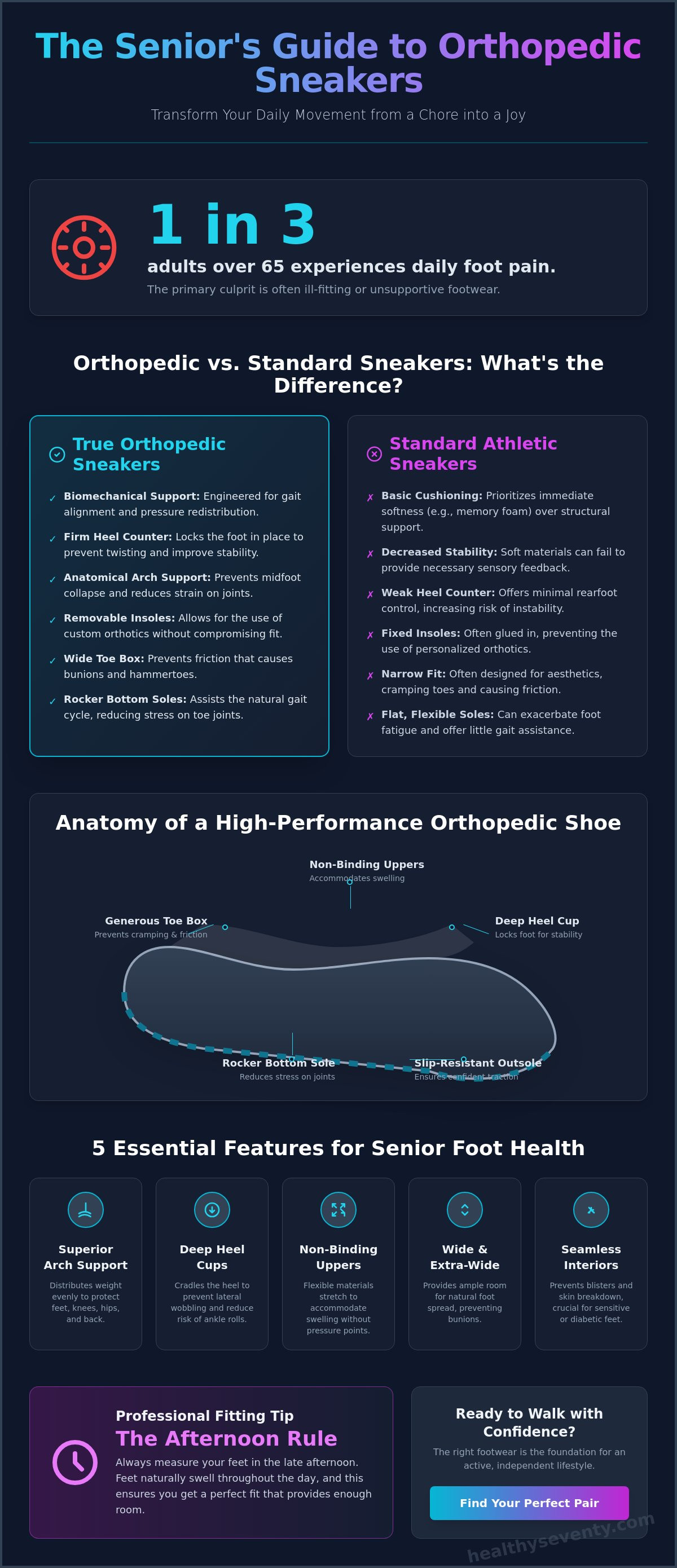
Have you ever noticed that even the softest foam shoes can leave your feet feeling fatigued after a short walk? it's a common experience because many standard shoes prioritize immediate softness over long term structural integrity. For those searching for orthopedic walking sneakers for seniors, the focus shifts from mere comfort to biomechanical engineering. Unlike mass market footwear, these specialized tools are designed specifically to address the physiological changes that occur as we move through our golden years.
As we age, our feet undergo significant transformations. The natural fat pads that once cushioned our steps begin to thin, and ligaments often experience laxity, leading to a wider or flatter foot profile. This is why Orthopedic shoes are so vital; they provide the external structure that your body can no longer supply on its own. At its core, an orthopedic sneaker is a specialized tool engineered for precise gait alignment and the redistribution of pressure across the entire foot. When you see the American Podiatric Medical Association (APMA) seal of approval on a shoe, you can trust it has been vetted by experts for these specific health benefits.
Orthopedic vs. Standard Athletic Sneakers
The primary difference lies beneath the surface. Standard athletic shoes often rely on memory foam or thick sponges that feel pleasant in the store but can actually decrease stability for seniors by failing to provide sensory feedback to the brain. In contrast, orthopedic designs feature reinforced shanks and firm heel counters to prevent the foot from twisting unexpectedly. These shoes also prioritize removable insoles, making it simple to swap in custom orthotics without compromising the fit or depth of the sneaker.
The Anatomy of a Senior-Friendly Walking Shoe
Every curve and material in a high quality walking shoe serves a specific purpose. A rocker bottom sole is a key feature that assists the natural gait cycle, rolling the foot forward gently to reduce stress on the toe joints. A generous toe box width is equally important to prevent the friction that causes bunions and hammertoes. Finally, we must prioritize slip resistance; a durable outsole with high traction rubber is a non-negotiable safety feature that provides the confidence you need to stay active on any surface. When these elements combine, orthopedic walking sneakers for seniors become more than just footwear; they become a foundation for your daily independence.
5 Essential Features to Look for in Orthopedic Footwear
Selecting the right orthopedic walking sneakers for seniors requires a shift in perspective. We aren't just looking for a shoe that looks good; we're looking for a foundation that respects the changes your feet have experienced over the decades. A truly supportive shoe acts as a partner in your mobility, offering specific engineering to counteract common age-related challenges. These five features are the pillars of a shoe that prioritizes your comfort and safety.
Superior Arch Support: This is the most critical element for preventing the collapse of the midfoot. It ensures your weight is distributed evenly, which protects the delicate structures of your feet from undue stress.
Deep Heel Cups: Stability begins at the rear of the foot. A deep heel cup locks your foot in place, acting as a cradle that prevents the lateral wobbling often responsible for ankle rolls.
Non-Binding Uppers: Seniors often manage edema or localized swelling. Flexible, non-binding materials stretch to accommodate these changes without creating painful pressure points.
Wide and Extra-Wide Widths: As we age, our feet naturally spread. Shoes with generous width options prevent the cramping and friction that lead to bunions or hammertoes.
Seamless Interiors: A smooth, soft lining is vital for preventing blisters. For those with sensitive skin, a seamless interior ensures there are no rough edges to cause skin breakdown.
Arch Support and Foot Alignment
Proper arch support does more than just soothe your feet; it realigns your entire kinetic chain. When your arches are supported, it reduces the compensatory strain on your knees, hips, and lower back. Every person’s needs are unique, whether you require support for high arches or a solution for flat feet. If you struggle with specific alignment issues, our guide on orthopedic sneakers for fallen arches provides deeper insights into maintaining midfoot health and vitality.
Stability and Traction for Fall Prevention
Falls are a significant concern, but the right footwear can be a powerful preventative tool. Heavy, clunky shoes can actually increase "trip-hazards" by causing leg fatigue. Modern orthopedic designs prioritize lightweight materials that don't sacrifice grip. Evaluating rubber compounds is essential; you need a sole that offers high-friction traction on both wet and dry surfaces. A firm heel counter provides the necessary resistance to keep your gait steady. The Arthritis Foundation offers excellent advice on how to properly fit walking shoes to ensure your joints stay protected. Many seniors find that Orthofeet Orthopedic Walking Sneakers offer the precise combination of these features to restore their confidence on the pavement.
Addressing Common Senior Foot Conditions with Footwear
Dealing with chronic foot pain can feel like an uphill battle, but it's often a sign that your current footwear isn't meeting your body's evolving needs. Many seniors accept discomfort as an inevitable part of aging. We're here to tell you that with the right orthopedic walking sneakers for seniors, you can find relief from the specific conditions that hold you back from your daily walk. It's about matching the engineering of the shoe to the unique anatomy of your challenge.
Take plantar fasciitis, for example. Many people believe that extra heel cushioning is the only answer. While a soft heel helps, it doesn't address the root cause, which is the strain on the plantar fascia ligament. You need integrated arch support to prevent that ligament from overstretching. Similarly, for those managing neuropathy or diabetes, the interior of the shoe becomes a protective sanctuary. Because sensation might be diminished, a seamless, non-irritating lining is vital to prevent skin breakdown that you might not even feel.
If you struggle with arthritis, the simple act of tying laces can be a significant hurdle. Easy-fastening systems, like hook-and-loop closures or bungee laces, restore your independence by making it simple to get out the door. These adjustable closures also provide a solution for edema. Since your feet might swell as the day progresses, stretchable fabrics and adjustable straps ensure your shoes never feel like a vice, adapting to your needs from morning to evening.
Footwear Solutions for Poor Balance
Have you ever felt unsteady on your feet? There's a profound connection between the sensory feedback your feet provide and your brain's ability to maintain balance. While we've discussed cushioning, a sole that is too thick or "mushy" can actually disconnect you from the ground. A low-profile sole often offers better "ground feel," which helps your brain coordinate movement and prevent falls. For a deeper look at this, you can explore our analysis of the best walking sneakers for balance to find a pair that reinforces your stability.
Managing Bunions and Hammertoes
Bunions and hammertoes require space, not just soft fabric. A square toe box is far superior to a rounded one because it allows for natural toe splay, reducing the pressure that causes inflammation. Look for "auto-fit" materials that conform to the unique shape of your foot rather than forcing your foot to conform to the shoe. By reducing friction, you don't just eliminate immediate pain; you actively prevent the development of calluses and corns that make every step a challenge. We believe your shoes should be as unique as the journey you've walked.
How to Properly Fit and Test Your New Sneakers
Finding the perfect fit for orthopedic walking sneakers for seniors isn't as simple as checking the size on your last pair of shoes. Our feet change as we age; they flatten, widen, and often swell throughout the day. If you order your "usual" size based on a measurement taken years ago, you'll likely end up with a shoe that restricts your movement rather than supporting it. We recommend measuring your feet in the late afternoon. This is when your feet are at their largest due to natural swelling, ensuring the shoes will be comfortable even after a long day of activity.
When you try on a new pair, ensure there's a "thumb’s width" of space between your longest toe and the tip of the shoe. This prevents your toes from crowding, which is essential for avoiding blisters and ingrown nails. Don't forget to perform a thorough "walk test" on a carpeted surface. Pay close attention to the heel; it should feel secure without any slippage. If your heel lifts out of the shoe, it could lead to instability and increased fall risk. Always test your sneakers with the socks you plan to wear most often, whether they're thick cotton or specialized compression hose, as this significantly impacts the volume required inside the shoe.
The Importance of Width and Depth
Standard medium widths often fail the needs of aging feet. Many seniors find that "D" or "EE" widths are necessary to provide the room needed for the foot to splay naturally. Additionally, look for shoes labeled with "extra depth." This is a specific design feature that allows you to swap out the factory insole for your own prescribed orthotic inserts without making the shoe feel tight. If you experience tingling, numbness, or see your foot "spilling" over the edges of the sole, the shoe is too narrow and could lead to nerve compression.
Easy-Entry Closure Systems
We know that bending over to struggle with laces can be more than just a nuisance; it can cause dizzy spells or strain your back. This is why we prioritize ease of entry. Hands-free slip-in technology allows you to step into your shoes while standing, maintaining your balance and dignity. While Velcro straps offer quick adjustments for fluctuating swelling, bungee laces provide a more uniform, secure feel across the top of the foot. We invite you to explore our curated selection of Orthofeet Orthopedic Walking Sneakers to find a pair that simplifies your morning routine while keeping you safe.
Our Recommendation: Orthofeet Orthopedic Walking Sneakers
After researching numerous technologies and design philosophies, we've found that one name consistently stands out for its commitment to senior wellness. Orthofeet has established itself as a trusted leader by focusing specifically on the complex, evolving needs of the aging foot. Their orthopedic walking sneakers for seniors don't just offer a soft surface; they provide a comprehensive engineering solution designed to restore your natural gait and protect your joints from the impact of every step.
At the heart of their design is the Ortho-Cushion System. This technology integrates premium anatomical arch support with multiple cushioning layers that work together to absorb shock and redistribute pressure across the entire foot. We also appreciate their innovative "Tie-less" lace systems. These designs offer the classic, active look of traditional laces but utilize hidden hook-and-loop closures for easy adjustment. It's an ideal solution for anyone who wants a modern, stylish aesthetic without the frustration of tying knots with limited hand dexterity. Orthofeet proves that medical efficacy and attractive design can coexist beautifully.
Why Orthofeet Stands Out for Seniors
What truly sets these shoes apart is the level of personal customization available right out of the box. Every pair includes multiple spacer insoles, which allow you to fine-tune the interior volume for a truly custom fit. This is invaluable if you manage fluctuating swelling or need extra room for a specific orthotic insert. The ergonomic soles are engineered with a mild rocker design, helping to propel you forward and reducing the workload on your ankles and knees. Many seniors report that after switching to these sneakers, they've regained the ability to enjoy long strolls through the neighborhood without the lingering aches they once considered an inevitable part of life.
Taking the Next Step Toward Mobility
Choosing the right footwear is a foundational part of a proactive lifestyle. High-quality sneakers act as a perfect partner to other stability tools, such as upright walkers, which help you maintain an erect posture while you move. We believe that investing in your feet is ultimately an investment in your future autonomy and your ability to stay connected with your community. Don't let preventable pain keep you on the sidelines. You have the wisdom to choose a path of comfort and the strength to keep moving forward.
Ready to experience the difference for yourself? Browse our curated collection of Orthofeet Orthopedic Walking Sneakers and find the perfect pair to support your journey toward lasting mobility and independence.
Step Toward a More Vibrant and Active Future
We've explored how the right footwear acts as a foundation for your independence and safety. Remember that true support comes from biomechanical design rather than just soft cushioning. By prioritizing features like deep heel cups and anatomical arch support, you're doing more than just soothing your feet; you're protecting your joints and significantly improving your balance. Finding the perfect orthopedic walking sneakers for seniors is a vital part of maintaining the active lifestyle you cherish.
Our curated selections are top-rated by podiatrists and designed specifically for the 60+ community. We act as your dedicated partner in wellness, providing not just high-quality products but also free wellness resources and a supportive community to guide your journey. We're committed to helping you navigate the choices that lead to better mobility and a higher quality of life.
Your next walk should be defined by comfort and confidence rather than hesitation or pain. We believe your best miles are still ahead of you, and it's our mission to help you enjoy them. Explore Our Expert-Curated Orthopedic Footwear Collection today and reclaim the joy of movement.
Frequently Asked Questions
Do I really need orthopedic sneakers if I don’t have a diagnosed foot condition?
You don't need a medical diagnosis to benefit from the superior support of orthopedic walking sneakers for seniors. These shoes act as a preventive tool to counteract the natural thinning of the foot's fat pads and the loss of ligament elasticity that occurs as we age. By providing a stable foundation today, you can avoid developing chronic conditions like plantar fasciitis or bunions later. It's about maintaining your current mobility and preventing discomfort before it starts.
How often should seniors replace their walking sneakers for maximum safety?
Most experts recommend replacing your walking sneakers every 300 to 500 miles, or approximately every six to twelve months if you walk daily. For seniors, it's safer to lean toward the six-month mark because worn-out midsoles lose their ability to absorb shock and provide essential stability. Check the outsoles for uneven wear patterns and press on the inside of the shoe; if the cushioning feels flat or unresponsive, it's time for a new pair to maintain fall prevention.
Can orthopedic walking shoes help with my knee and hip pain?
Yes, properly aligned footwear can significantly reduce strain on your knees and hips. When your feet overpronate or lack arch support, it forces your legs to rotate inward, which places uneven pressure on your higher joints. Orthopedic walking sneakers for seniors realign your gait from the ground up. This correction helps distribute your weight more evenly, often providing relief for chronic joint pain that you might have previously attributed solely to arthritis.
Are slip-on sneakers safe for seniors with balance issues?
Slip-on sneakers are safe as long as they feature a firm heel counter and a non-slip outsole. Modern hands-free technology allows you to step into the shoe without bending over, which reduces the risk of dizzy spells or loss of balance. However, you must ensure the upper material is snug enough to prevent your foot from sliding inside the shoe. Avoid flimsy, backless slippers; instead, choose structured slip-ons that provide full foot enclosure and reliable traction.
What is the difference between a walking shoe and a running shoe for an older adult?
Walking shoes are specifically designed for the heel-to-toe motion of a standard gait, whereas running shoes prioritize impact absorption for the midfoot or forefoot. For an older adult, walking shoes offer more flexibility at the ball of the foot and more consistent arch support throughout the stride. Running shoes often have a thicker heel stack height that can actually decrease stability and increase the risk of tripping if you aren't moving at high speeds.
Will Medicare cover the cost of my orthopedic walking sneakers?
Medicare Part B typically only covers orthopedic shoes if they are a permanent, integral part of a leg brace. There is also coverage available for therapeutic shoes if you've been diagnosed with diabetes and meet specific medical criteria. For most seniors seeking general walking support, these shoes are considered an out-of-pocket wellness investment. It's always wise to check your specific Medicare Advantage plan, as some private insurers offer additional fitness or footwear benefits.
How do I clean and maintain orthopedic sneakers to ensure they last?
You should hand wash your sneakers using a soft cloth and mild soap rather than putting them in a washing machine. High heat from a dryer can warp specialized orthopedic materials and degrade the adhesives, so always let them air dry in a well-ventilated area. To maintain the structural integrity of the heel, use a shoehorn when putting them on. This prevents the heel counter from collapsing, which is essential for your ongoing stability.
Can I wear my custom orthotics in these sneakers?
Most high-quality orthopedic sneakers are designed with removable insoles specifically to accommodate custom orthotics. Look for shoes that mention "extra depth," as this ensures your foot won't feel cramped or sit too high in the shoe once your personal insert is added. This combination allows you to benefit from the shoe's external stability features while still receiving the precise, medically prescribed correction your feet require for pain-free movement.


Comments