


Orthopedic Sneakers for Heel Pain Relief at Home
Shoes can contribute to plantar fasciitis and heel pain when they lack cushioning or arch support, or no longer fit well. Orthopedic sneakers for heel pain relief may cushion impact and support the foot, but they can’t identify every cause of heel pain.
If your first steps at home feel uncomfortable, it’s reasonable to look for practical relief that fits your day. Supportive footwear can reduce pressure on the heel during walking and standing, while simple at-home measures may also ease strain.
This guide explains how footwear may affect plantar fasciitis, what heel cushioning and supportive features can do, and how to approach relief at home. You’ll also learn what to expect over time and when persistent pain warrants medical attention, so you can make informed choices without expecting shoes alone to solve the problem.
Table of Contents
Can shoes trigger plantar fasciitis?
Yes. High heels can strain the plantar fascia, while flat, unsupportive shoes and worn-out soles may increase pressure during everyday walking. Look for arch support, cushioning, and a stable fit rather than focusing on appearance alone.
Built-In Orthotics and Supportive Arches
Supportive casual shoes can make everyday activities more comfortable by supporting the arch. Built-in orthotics are shaped footbeds that support the foot inside the shoe. They should feel steady under the arch, not create a painful ridge or force your foot into an uncomfortable position.
Check the shoes while standing and walking. The heel should feel secure, and the arch support should meet your foot comfortably. For example, a casual shoe with arch support may be a better everyday choice than a flat ballet shoe with little structure.
Cushioning and Stability
Cushioning softens impact as the heel meets the floor, while arch support can reduce strain on the plantar fascia. When choosing shoes for heel discomfort, look for a cushioned midfoot and a supportive midsole. The sole should feel stable rather than collapse as you step.
Stability matters as much as softness. A very soft shoe that twists easily may not provide the steady base you need. A firm, supportive shoe with cushioning can balance comfort and support. Compare both feet in the shoes, then walk indoors and notice any pressure, rubbing, or change in alignment.
Removable Insoles and Orthotic Compatibility
Some shoes have anatomical insoles shaped to support the foot. If you use separate orthotic insoles, they can fit in orthopedic sneakers when the shoe’s footbed is removable and the orthotic sits securely without crowding your toes or lifting your heel out of place.
To assess the fit, remove the shoe’s original insole if possible, place your orthotic inside, and try the shoe while standing. A tight upper, heel movement, or new discomfort may mean there isn’t enough room for both insoles.
A podiatrist’s prescription isn’t inherently required to wear orthopedic sneakers; insurance coverage depends on the specific plan. Orthotic insoles can be used when they fit the sneaker securely without compromising comfort or alignment.
Shock-absorbing heel cups and reduced heel pressure
A heel cup cushions contact between the heel and the shoe, while the sneaker’s midsole softens impact from the floor. Together, fit and cushioning can support comfort during ordinary walking.
Cushioning for Heel Impact
Notice how your heel sits in the shoe and how the sole feels underfoot. A cushioned heel area can soften impact when your heel strikes the ground, while a cup can cradle the heel instead of letting it slide against a hard surface. This may add comfort at home or on casual errands.
Some sneakers combine foam padding with a rocker sole, which curves upward near the toes. Orthofeet describes its ergonomic soles and mild rocker construction as reducing heel-strike impacts, and its foam-padded linings as protecting the heel. These features address different contact points, so assess the heel lining and sole together.
Heel cups and insoles aren’t automatically custom orthotics. A separate insert should sit flat inside the sneaker without bunching or shifting. For example, if an insert lifts your heel enough to make the shoe rub, the combination may add discomfort rather than improve the fit.
Fit for Heel Pain
Choose a sneaker that holds your heel in place without squeezing it. Your toes need room to move, and your heel shouldn’t lift noticeably as you step. Try both shoes while standing, then walk on a firm floor to see whether cushioning feels even under each heel.
Orthopedic sneakers should feel secure at the heel and comfortable across the foot, without sliding, rubbing, or pinching. A loose heel can move against the lining; a tight upper can create pressure elsewhere. Notice whether a rocker sole rolls smoothly through your step rather than forcing an unfamiliar stride.
For at-home walking, compare the heel feel on a hard floor and a rug. If you want to explore footwear designed for walking support, browse supportive sneaker options as one part of your comfort routine.
How Long Should I Expect Shoes to Relieve My Heel Pain?
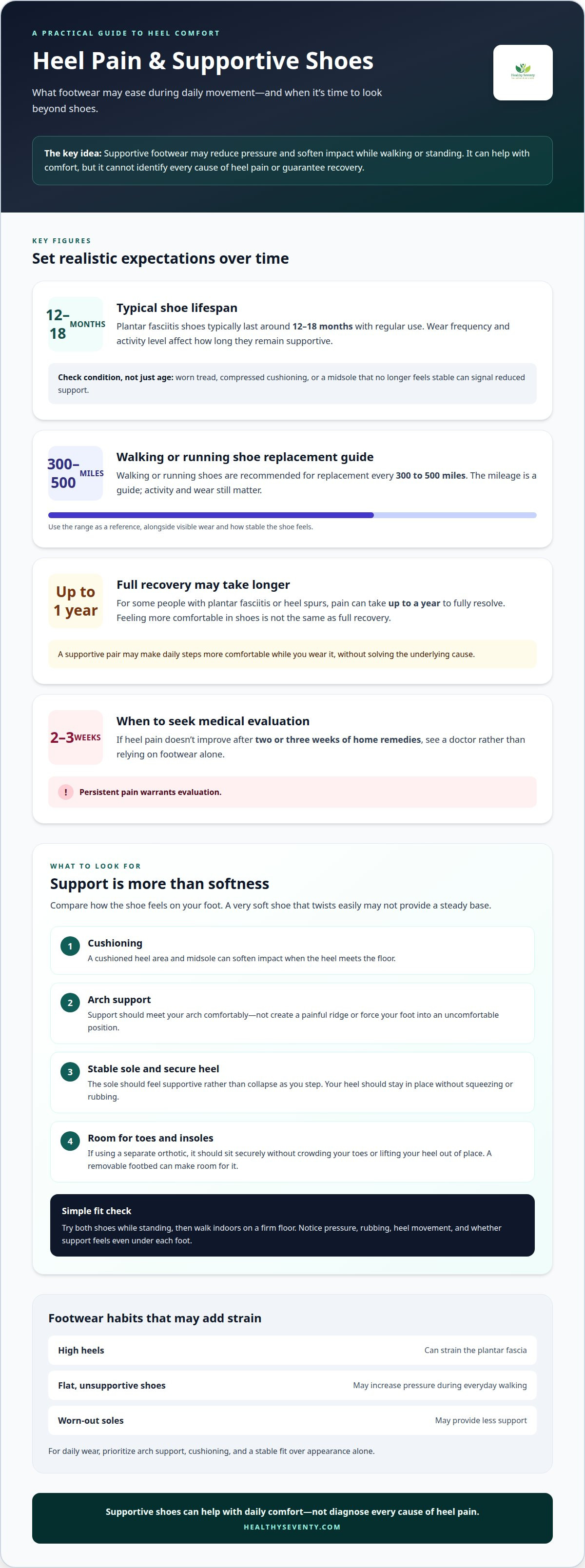
Shoes designed for plantar fasciitis can reduce stress during walking, standing, or exercise, but pain relief and full recovery aren’t the same. A supportive pair may make daily steps more comfortable while you wear it. For some people with plantar fasciitis or heel spurs, pain can take up to a year to fully resolve.
As part of a morning routine, notice whether your first steps feel different after changing footwear. A stable shoe with a supportive midsole and cushioning can soften impact during walking or long periods of standing. For example, someone working a long shift on hard floors may value steady support and shock absorption throughout the day, not just a soft feel.
Wear shoes suited to the activity. Walking shoes can help support the foot during regular walks, while work shoes for extended shifts need a secure fit and cushioning that stays comfortable on firm floors. Plantar fasciitis shoes typically last around 12-18 months with regular use, although wear frequency and activity level affect their lifespan.
Track the shoe’s condition as well as its age. Walking or running shoes are recommended for replacement every 300 to 500 miles; worn tread, compressed cushioning, or a midsole that no longer feels stable can signal reduced support. For instance, frequent daily walking may wear a pair differently than occasional errands.
When should heel pain be evaluated by a doctor instead of treated with shoes? See a doctor if pain doesn’t improve after two or three weeks of home remedies. Shoes can support everyday movement, but persistent pain warrants evaluation rather than relying on footwear alone.
How do orthopedic sneakers compare with regular running shoes for heel pain?
The label alone doesn’t determine which shoe suits heel pain. Compare the actual features: cushioning, arch support, heel stability, and how the sole moves with each step. A running shoe may offer some of these, while an orthopedic sneaker may emphasize structured support. Designs vary, so assess the individual shoe rather than assuming one category is always better.
A rocker sole, which curves upward toward the toe, can help with plantar fasciitis-related heel pain. It changes how your foot rolls forward, so test the motion at a comfortable pace. Walk indoors and notice whether the transition from heel contact to toe-off feels smooth or awkward. A rocker sole isn’t right for every stride.
For walking around home, compare how each pair feels on a firm floor. Notice whether the cushioning softens heel contact and whether your heel stays steady inside the shoe. Take a short walk and check for rubbing, pinching, or a change in your usual gait. These practical checks are more useful than choosing by “running” or “orthopedic” wording alone.
For longer walks or exercise, consider the activity as well as comfort. A running shoe may suit a familiar exercise routine if its support and fit feel right; an orthopedic sneaker may suit you better if its features match your needs. Check that any removable insole or orthotic sits flat and doesn’t crowd your foot. Stop using shoes that cause new discomfort.
Choose based on your own step, not the category name. To explore footwear options for walking, browse supportive sneaker choices and compare their fit and feel with your daily activities.
Healthy Seventy: Orthofeet Orthopedic Walking Sneakers
Healthy Seventy features Orthofeet Orthopedic Walking Sneakers for readers considering supportive footwear for everyday walking. If you’re comparing orthopedic sneakers with regular running shoes, this walking sneaker is one option to weigh against the fit, cushioning, and support features discussed above.
Choose footwear based on how it feels during your usual activities, and seek medical evaluation for heel pain that persists despite home care. Shoes can support everyday comfort, but they don’t replace care for ongoing pain. If footwear is one step in your plan, explore Healthy Seventy’s Orthofeet Orthopedic Walking Sneakers.
Make Your Next Step a Comfortable One
Choosing orthopedic sneakers for heel pain relief can be one practical part of caring for your feet at home. Let comfort during your everyday routine guide your decision, and notice how your shoes feel during ordinary walking. Small, thoughtful adjustments can help you stay engaged in the activities that matter to you.
Healthy Seventy offers Orthofeet Orthopedic Walking Sneakers, along with the VOCIC Upright Walker for Seniors and Home Infrared Sauna for Relaxation. These are different tools for different needs, so focus on the option that fits your personal priorities. If you’re ready to explore the footwear discussed here, contact Healthy Seventy for help taking your next step.
Keep moving at a pace that feels right for you, and give yourself space to make informed choices. Comfort and confidence can begin with one considered step.
Frequently Asked Questions
Are these plantar fasciitis sneakers suitable for walking and running?
They may suit walking and some exercise, but comfort while running depends on the shoe’s fit and your stride. Start with an activity that feels manageable, such as a short walk on a familiar surface, and notice whether discomfort increases. A sneaker that feels steady for errands may not feel right during faster movement, so choose footwear for how you plan to use it.
How to cure heel pain fast?
There’s no dependable instant cure because heel pain can have different causes. Rest and at-home measures may help some heel pain improve over a few weeks. Reduce activities that aggravate the area and use supportive footwear during necessary walking. If pain continues, worsens, or affects everyday movement, seek medical advice rather than relying on shoes alone.
What are the most common treatments for heel pain?
Treatment depends on what’s causing the pain. Rest, at-home therapies, and supportive footwear are practical measures people may consider, while persistent symptoms call for medical evaluation. Track what worsens the discomfort, such as a particular activity or shoe, so you can clearly describe the pattern. This information is for educational purposes and doesn’t replace professional medical advice.
What kind of inserts are good for heel pain?
Look for an insert that cushions the heel and supports the foot without creating a hard pressure point. It should sit securely inside the shoe and leave enough room for your foot. If the insert shifts or makes the shoe feel cramped, it may not be a comfortable match. Persistent pain still warrants appropriate medical attention.
What features should orthopedic sneakers have for heel pain relief?
Consider arch support, heel cushioning, a stable sole, and enough room for your toes. Think about where you’ll wear the shoes, too: indoor steps, errands, and longer walks place different demands on footwear. Try them during the activity you have in mind and notice any rubbing, pressure, or unsteadiness.
Which orthopedic sneakers are best for plantar fasciitis and heel pain?
The right choice is the pair that fits your foot and feels supportive during everyday activities. Compare how it holds your heel, whether the sole feels stable, and whether you can walk without rubbing or pinching. A shoe’s category name alone can’t determine comfort. If heel pain persists despite home care, choosing footwear doesn’t replace professional medical advice.
Comments