


Landline Personal Emergency Alert Device: The 2026 Guide to Reliable Home Safety
Updated: Sep 16

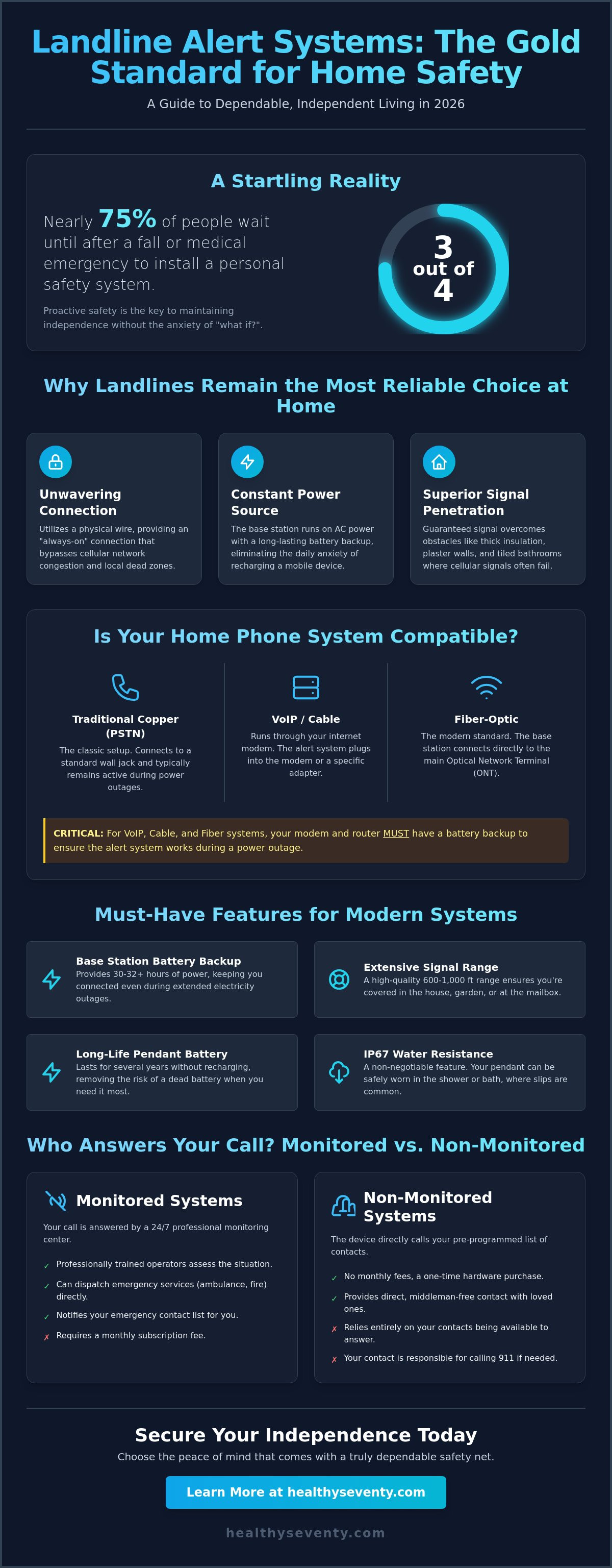
Did you know that nearly 75% of people wait until after a fall or a medical emergency to invest in a safety system? It's a startling figure from a February 2025 survey, but it highlights a common desire to maintain independence without the fuss of complicated technology. You likely value your autonomy and want a solution that simply works without worrying about dead batteries or a weak cellular signal in your living room. The anxiety of hidden fees or wearing a bulky, stigmatized device can make the decision feel overwhelming. Choosing a landline personal emergency alert device ensures you have a dedicated connection that doesn't rely on the whims of a mobile network.
We understand that your home is your sanctuary and you deserve to feel secure within its walls. This guide will show you why landline-based systems remain the gold standard for home reliability in 2026 and how to select a solution that supports your active, independent lifestyle. We'll examine the technical benefits of a hardwired connection, discuss how to avoid common pitfalls, and help you find the peace of mind that comes with a truly dependable safety net.
Key Takeaways
Learn why a hardwired connection offers superior reliability by maintaining a constant power source that cellular devices simply cannot match.
Discover how to verify that your landline personal emergency alert device provides a sufficient signal range to keep you safe while gardening or relaxing on the porch.
Compare the long-term value of monitored subscriptions against non-monitored systems that allow for direct, middleman-free contact with your loved ones.
Master the physical installation process and learn the most effective way to organize your emergency contact list for a rapid response.
Use our curated decision matrix to select a safety solution that fits your specific home layout and supports your goal of proactive, independent living.
Table of Contents
The Enduring Value of Landline Personal Emergency Alert Devices
A landline personal emergency alert device acts as a dedicated safety hub connected directly to your home's communication infrastructure, whether that is a Public Switched Telephone Network (PSTN) or a modern Voice over Internet Protocol (VoIP) line. Unlike cellular alternatives that rely on the nearest tower, these systems use a physical wire to transmit help signals. This "always-on" nature provides a level of power consistency that battery-dependent mobile devices simply cannot match. In 2026, even as fiber-optic services become the standard, the landline remains a symbol of unwavering stability. It's a deliberate choice for those who prioritize a fail-safe connection over the fluctuating traffic or congestion of local cell towers.
Why Reliability Outshines Portability for Home-Bound Seniors
Many seniors spend the vast majority of their time within the comfort of their own four walls. For this lifestyle, the portability of a smartphone or a GPS-enabled watch is often less vital than the guaranteed signal penetration of a wired system. Modern energy-efficient homes often feature thick insulation and specialized glass that can inadvertently create "dead zones," blocking cellular signals in critical areas like basements or tiled bathrooms. A landline personal emergency alert device bypasses these obstacles entirely. There's also a significant psychological benefit to using a fixed, familiar technology. Knowing that your lifeline is physically tethered to the wall provides a sense of permanence and calm that digital, wireless gadgets often lack. This reliability is why Medical Alarm Systems have remained a cornerstone of independent living for decades.
Compatibility Check: VoIP, Fiber, and Traditional Copper
It's a common misconception that "landline" only refers to old-fashioned copper wires. Today, your safety hub can run seamlessly on cable or fiber-based phone services provided by your internet company. However, you must ensure your equipment is compatible with your specific setup. Before you bring a new system into your home, it's wise to verify your connection type.
Traditional Copper (PSTN): Uses a standard wall jack; usually stays active during power outages.
VoIP/Cable: Connects to your internet modem; may require a specific adapter for the alert system.
Fiber-Optic: The modern standard; requires the alert base station to be connected to the main terminal.
If you use a digital setup like fiber or VoIP, your modem and router must have a battery backup. Since these services rely on your home’s electricity, a backup power supply ensures your connection remains live even if the neighborhood goes dark. Taking this small step preserves the "set it and forget it" simplicity that makes these devices so trustworthy for maintaining your vibrant, independent lifestyle.
Essential Features for 2026 Home Safety Systems
Selecting a landline personal emergency alert device involves more than just plugging a base station into the wall. It's about the physical tools you'll interact with every single day. Reliability in 2026 means hardware that survives life's little accidents while providing a seamless bridge to help. While technical specifications often look similar on paper, the real world demands features that prioritize clarity, range, and physical comfort. You want a system that feels like a natural extension of your home rather than a medical intrusion.
Signal range is perhaps the most misunderstood feature. Most manufacturers list a range between 600 and 1,000 feet. While this sounds vast, your home's unique structure plays a major role. Plaster walls, large appliances, or even heavy mirrors can dampen that signal. A high-quality system accounts for these hurdles, ensuring you're protected whether you're in the upstairs guest room or checking the mailbox at the end of the drive. Since many falls occur in the bathroom, an IP67 water-resistance rating is non-negotiable. This ensures your pendant can be submerged in water without failing. You shouldn't have to take it off to shower, as that's exactly when you might need it most.
Power management is equally vital. The base station typically runs on AC power but includes a backup battery for outages, often lasting 30 to 32 hours. Conversely, the pendant usually features a long-life lithium battery. These are designed to last for several years without a recharge, removing the daily "did I plug it in?" anxiety. As noted in Forbes' review of the best medical alert systems, these hardware benchmarks are what separate a trusted resource from a simple gadget.
The Critical Role of Two-Way Voice Pendants
If you choose a landline personal emergency alert device with two-way voice, you gain a massive safety advantage. Rather than shouting toward a base station in the hallway, you speak directly into the button on your chest. Modern systems utilize clear-voice technology and noise cancellation to ensure the dispatcher hears you clearly, even if a television is blaring or a fan is running. This is especially helpful for those with hearing impairments, as it brings the operator's voice much closer to the ear, fostering a sense of calm during a stressful moment.
Wearability and Ergonomics: Beyond the Plastic Button
Comfort is the key to consistency. If a device is heavy or itchy, it's more likely to end up on the nightstand where it can't help you. Look for lightweight materials and various attachment options like wristbands, necklaces, or belt clips. A breakaway lanyard is a vital safety addition. It's designed to snap apart if it gets caught on a door handle or furniture, preventing accidental injury. Whether you prefer a discrete wristband or a classic pendant, the goal is a solution that supports your vitality without ever getting in your way.
Comparing Monitored vs. Non-Monitored Landline Systems
Choosing the right landline personal emergency alert device often involves a fundamental decision about how your help signal is managed. Do you prefer a professional dispatcher as a middleman, or would you rather connect directly with those you trust most? Both paths offer unique advantages for your independence. Monitored systems function through a service model where a recurring fee grants you access to a 24/7 call center. Non-monitored systems are hardware-focused. They require a one-time purchase but no monthly obligations. Each approach addresses different needs regarding response speed and financial planning.
A significant differentiator is how each system handles the "False Alarm" factor. Professional dispatchers act as a vital filter. If you accidentally press your button while reaching for a book, the dispatcher speaks to you through the base station to confirm you are safe. This prevents unnecessary emergency vehicle deployments. Non-monitored systems, conversely, follow a pre-programmed "Call Tree." While this offers a direct line to family or 911, it places the responsibility of filtering calls on your emergency contacts. This directness can be a strength, but it requires a reliable network of neighbors and relatives who are ready to answer the phone at any hour.
The Financial Freedom of No-Monthly-Fee Devices
For many, the appeal of a non-monitored landline personal emergency alert device is rooted in long-term financial clarity. When you calculate the multi-year savings of avoiding recurring monitoring fees, the total often reaches into the thousands. This significant sum can be redirected toward other aspects of your well-being or home comfort. Systems like those popularized by LogicMark function by dialing a sequence of numbers you choose. If the first contact doesn't answer, the device automatically moves to the next person on your list. This sequential dialing ensures that your request for help is heard without the burden of a lifetime contract or hidden monthly costs.
When to Choose Professional Monitoring
While the savings of non-monitored devices are attractive, professional monitoring remains a cherished choice for those who live far from family or have complex health needs. A dispatcher provides a calm, trained voice in the middle of the night, regardless of whether your children have their phones on silent. Some monitored plans also include proactive wellness check-ins, where a representative calls just to say hello and ensure you are feeling your best. This service pairs beautifully with other assistive technology for seniors living alone, creating a comprehensive safety net that honors your desire to live vibrantly and securely on your own terms.
Setting Up Your Landline Emergency Device for Success
Setting up your landline personal emergency alert device is a straightforward process, but attention to detail ensures it works perfectly when every second counts. Begin by choosing a central location for the base station, such as a hallway table or kitchen counter. This central positioning maximizes the pendant's reach throughout your home. You'll simply plug the device into a standard power outlet and connect the phone cord to your wall jack. If you still use a traditional telephone, look for a pass-through jack on the back of the base station. This allows you to keep your regular phone connected without needing a second wall outlet.
Once the physical hardware is in place, it's time to program your "Call Tree." For non-monitored systems, you'll enter your emergency contacts in a specific order. We recommend starting with a nearby neighbor who can arrive quickly, followed by family members, and finally 911 as the ultimate safeguard. This logical progression ensures that local help is notified first for minor incidents, while professional emergency services remain the final tier of protection.
Optimizing for DSL and Modern Digital Lines
Do you use DSL for your internet? If so, installing a DSL filter is a vital step that many overlook. Without this small filter, your internet signal can interfere with the alert device, potentially causing a failed connection during an emergency. For those on digital or fiber lines, ensure the base station is connected to the primary phone port on your modem. A successful setup also requires a "Kitchen to Garden" range test. Don't simply trust the box's specifications. Put on your pendant and walk to the furthest corners of your property, including the basement and the backyard. Have a friend stay by the base station while you press the test button from these distant spots. This verifies that your signal penetrates through walls and outdoor obstacles. To maintain this reliability, establish a monthly testing routine to confirm the connection is live and check the battery status.
Integrating with a Broader Home Safety Strategy
A landline personal emergency alert device is your final line of defense, but it works best when paired with a proactive environment. We encourage you to consult a fall prevention for elderly at home checklist to identify potential hazards like loose rugs or poor lighting. By combining a reliable alert system with a safe living space, you create a holistic foundation for your independence. If you are ready to secure your home with a trusted solution, you can find our recommended landline personal emergency alert device here.
The Healthy Seventy Recommendation: Choosing Your Path to Peace
Selecting a landline personal emergency alert device is a significant step toward securing your future. This decision shouldn't feel like a clinical necessity; instead, view it as a proactive investment in your continued vitality. Your choice ultimately depends on a few personal variables. Consider your monthly budget, the total square footage of your property, and the proximity of your local support network. If you have family nearby who can respond in minutes, a non-monitored system offers incredible financial freedom. However, if you live in a more secluded area, professional monitoring provides a vital layer of 24/7 security that honors your desire to remain in the home you love.
Before you finalize your decision, we recommend asking yourself these three essential questions:
Does my home have specific "dead zones" where a cellular signal fails, but a landline remains strong?
Is my primary goal to save on monthly costs, or do I prefer the comfort of a trained dispatcher?
Is the wearable pendant light enough that I'll actually wear it during all my daily activities?
By answering these honestly, you'll move past marketing hype and find a solution that truly fits your life. We prioritize quality over complexity, focusing on hardware that performs exactly when you need it most.
Why We Value the Landline Solution in 2026
Our commitment at Healthy Seventy is to empower you to live your most vibrant life. We've seen how complicated gadgets can lead to "technology fatigue," where devices end up in a drawer rather than providing safety. That's why we champion the landline personal emergency alert device. It's a simple, reliable partner that supports your active movement. Whether you are focusing on non invasive joint pain relief to stay mobile or enjoying your garden, this technology stays in the background until it's needed. Our rigorous curation process ensures that every device we recommend meets the highest standards for range and durability.
Next Steps for Your Safety Journey
Safety is a collaborative effort. We encourage you to sit down with your family or trusted neighbors to discuss your emergency protocols. Share your "Call Tree" order with them and explain how the device works. This conversation isn't about a loss of independence; it's about building a community of support that allows you to live on your own terms. We invite you to join the Healthy Seventy community for more resources on maintaining your well-being and proactive health choices. If you're ready to take the next step, explore our curated landline personal emergency alert device options today and reclaim your peace of mind.
Securing Your Independent Future Today
You now understand why the physical connection of a home phone line remains a cornerstone of safety in 2026. By bypassing cellular dead zones and providing a constant power source, you ensure that help is always within reach when you need it most. Whether you prefer the financial freedom of a no-monthly-fee system or the 24/7 reassurance of a professional dispatcher, the right landline personal emergency alert device acts as a silent partner in your daily vitality. It is about more than just a button; it is about the confidence to move freely through your home and garden without fear.
We've empowered over 10,000 seniors to age in place with dignity through our expert-vetted solutions. Our focus on curated quality ensures you receive a device that works reliably without the burden of complicated technology or unexpected costs. Take the next step in your safety journey today. Explore Our Curated Emergency Alert Devices for Seniors and join a community dedicated to proactive, vibrant living. You've worked hard to build your sanctuary, and you deserve to feel completely secure within its walls.
Frequently Asked Questions
Do landline personal emergency alert devices work with VoIP or Fiber?
Yes, most modern landline personal emergency alert device systems are fully compatible with VoIP and Fiber-optic phone services. Since these digital services rely on your home's internet connection, you must ensure your modem or router has a dedicated battery backup. This ensures the line stays active during a power outage, maintaining your safety net when you need it most. It's a simple step that preserves the reliability you expect from a wired connection.
Can I get an emergency alert device with no monthly fees?
You can absolutely find systems that operate without monthly fees. Non-monitored landline systems allow you to make a one-time hardware purchase without recurring subscription costs. You simply program the device to dial your personal contacts or 911 directly. This approach provides a direct line to help while offering significant long-term financial independence, making it a popular choice for those with a strong local support network.
What happens if I press the button but cannot speak?
If you cannot speak after pressing the button, monitored systems trigger a "no-voice" protocol where dispatchers immediately contact your emergency list or local EMS. In a non-monitored setup, the device plays a pre-recorded emergency message to the recipient. This ensures that help is dispatched even if you're unable to communicate your specific needs during a crisis. It's a fail-safe feature designed to provide peace of mind in high-stress situations.
How far away from the base station will the pendant work?
Most landline personal emergency alert device options provide a range between 600 and 1,000 feet from the base station. This distance typically covers every room in a standard home, including the basement and the immediate driveway or garden. We always recommend performing a physical range test during your initial setup to identify any thick walls or structural obstacles that might obstruct the signal in your specific living space.
Are these devices waterproof for use in the shower?
Most reputable pendants are water-resistant with an IP67 rating, which means they're safe to wear in the shower or bath. Since many falls occur in wet environments, keeping the device on while bathing is a vital safety habit. While they handle splashes and brief immersion well, you shouldn't submerge them in deep water like a swimming pool for long periods. This protection ensures you're never without a lifeline during your daily self-care routine.
Do I need a special phone line for an emergency alert device?
You don't need a special phone line for these systems; they plug into a standard RJ11 phone jack. If you use DSL internet, you'll simply need to install a small DSL filter to prevent data signals from interfering with your emergency calls. These filters are often included with the device and take only a few seconds to install. It's a straightforward setup that doesn't require professional electrical work or expensive home modifications.


Comments