


Infrared Sauna Benefits for Senior Circulation and Heart Health
Infrared heat may prompt changes in circulation, but that alone does not show that it protects the heart. Potential infrared sauna benefits for circulation in seniors include widened blood vessels and increased blood flow, along with a rise in heart rate. The effect varies with how each person responds to heat.
If you’re considering sauna use, it helps to understand both its possible benefits and its limits. Infrared saunas heat the body directly, while traditional saunas warm the surrounding air. Both expose the body to heat that can affect circulation, and a lower cabin temperature does not necessarily mean less strain on the heart.
This article explains how infrared heat may affect circulation and cardiovascular health, what research can and cannot tell us, and how infrared saunas compare with traditional ones. It also covers why age, existing heart conditions, and medications matter when considering sauna use, helping you make a more informed choice.
Table of Contents
What are the differences between infrared and traditional saunas?
Both sauna types expose the body to heat that can affect circulation. The main difference is whether the heat reaches the body directly or through warmed air.
Infrared and Traditional Heat
Infrared saunas heat the body directly, while traditional saunas warm the surrounding air first. Infrared cabins typically operate between 110°F and 140°F; traditional saunas can reach 180°F to 200°F. A lower cabin temperature doesn’t mean the body has no heat response. The difference matters when considering comfort, but temperature alone doesn’t describe how an individual’s circulation responds.
A University of Missouri study found that infrared heat penetrated tissue up to 1.5 inches. This describes a finding from a study, not a measure of improved circulation for every person. Both sauna types can prompt blood vessels to widen, changing how blood moves through the body.
Age and Heat Regulation
Thermoregulation is the body’s process for managing its internal temperature. The brain works to maintain a body temperature of 98.6 degrees Fahrenheit. Sauna heat challenges that balance, so the body responds by moving heat toward the skin and releasing it through sweating.
For adults over 65 who are new to sauna bathing, starting at a lower temperature or spending less time inside can make heat exposure more measured. This matters because the body must manage both rising heat and fluid loss during a session. Individual response, not age alone, shapes how comfortable the experience feels.
Physiological Responses to Heat
Heat can widen blood vessels, a response called vasodilation. Wider vessels can reduce vascular resistance and arterial pressure, while increased blood flow carries heat toward the skin. This is a circulatory response, not evidence that infrared warmth treats a specific condition.
Sauna heat can also raise heart rate and produce responses similar to moderate exercise. Muscles warm, and sweating helps the body release heat. These reactions explain why sauna use can feel physically demanding, even while seated. When weighing sauna use, consider the heat exposure and its effects on blood pressure, circulation, and comfort. Heat may ease muscle tightness or arthritis-related stiffness, but these effects are separate from heart-health outcomes.
How does Infrared Sauna improve heart health?
Infrared heat can raise heart rate, so sauna use adds cardiovascular workload. Research offers context, but sauna sessions do not replace prescribed heart care.
Temperature and Session Length
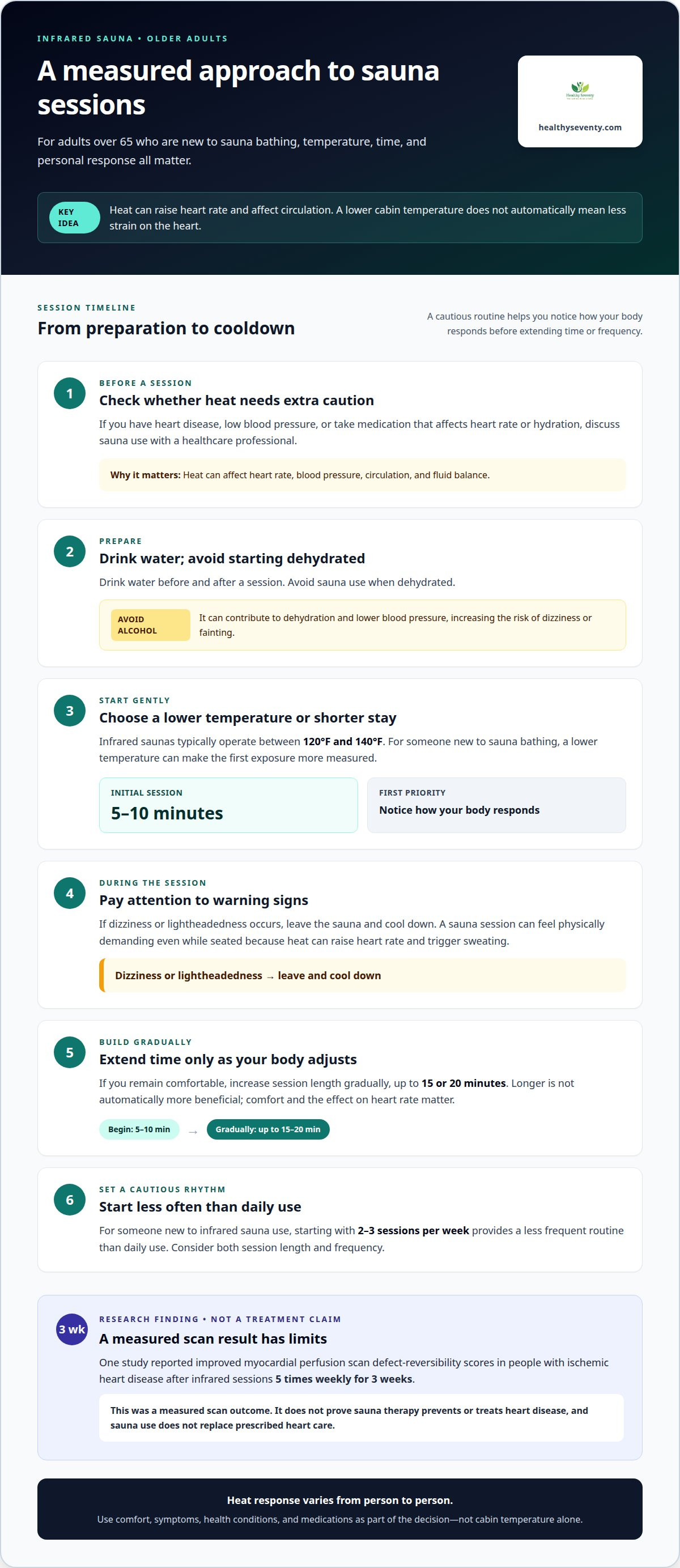
Temperature and time together shape the heat load of a sauna session. Infrared saunas typically operate between 120°F and 140°F, while traditional saunas can be hotter. For adults over 65 who are new to sauna bathing, a lower temperature or shorter stay can make the initial experience more measured.
Begin with 5 to 10 minutes, then increase gradually as the body adjusts, up to 15 or 20 minutes. The shorter starting point gives you time to notice how your body responds before extending a session. A longer stay isn’t automatically more beneficial; comfort and the heat’s effect on your heart rate matter.
Short Sessions and Safe Duration
Short sessions limit continuous heat exposure while you learn how your body responds. For someone new to infrared sauna use, starting with 2 to 3 sessions per week provides a less frequent routine than daily use. Pay attention to dizziness or lightheadedness, and leave the sauna to cool down if either occurs.
Hydration matters, too. Drink water before and after a session, and avoid using a sauna when dehydrated. Alcohol can contribute to dehydration and lower blood pressure, increasing the risk of dizziness or fainting. These steps support a more cautious approach, especially for older adults managing heart conditions, low blood pressure, or medications that affect heart rate or hydration.
One study offers a specific example of the science: after 3 weeks of infrared sessions 5 times weekly, myocardial perfusion scan defect-reversibility scores improved in people with ischemic heart disease, according to the U.S. National Library of Medicine. This result concerns a measured scan outcome, not proof that sauna therapy prevents or treats heart disease. Discussing sauna use with a healthcare professional is particularly relevant for older adults with heart disease or medications affecting heart rate or hydration. A thoughtful routine should account for both session length and frequency. Explore sauna wellness resources for ideas that can complement a measured approach.
Sauna use and cardiovascular health
Studies connect sauna bathing with cardiovascular measures and outcomes, including blood pressure and fatal heart disease. The findings help frame sauna use as one part of a wider wellness picture.
Potential Cardiovascular Benefits
Potential benefits include changes in blood pressure and circulation, especially when sauna use accompanies exercise. In one study, people who exercised and then used a sauna for 15 minutes, 3 times per week, had lower blood pressure. This example links bathing with an active routine rather than presenting heat as a substitute for movement.
A Japanese study tracked 149 infrared sauna users and found average systolic blood pressure fell by 6 points after three weeks. Blood pressure is one cardiovascular measure, but a change in that measure alone does not describe every aspect of heart health. The study offers a specific result, not a personal prediction.
Cardiovascular Outcomes
A 20-year Finnish study followed 2,315 men. Some observational research has linked more frequent sauna use with a lower risk of fatal cardiovascular disease, but it does not establish that sauna use prevents it. The same study reported 31% lower all-cause mortality in the more frequent-use group. These long-term findings give context to questions about regular sauna bathing and health outcomes.
Another Finnish study compared 2,300 middle-aged men who used a sauna four to seven times weekly with those using one once weekly or less. Frequent bathers had a 63% lower risk of sudden cardiac death. These are group-level associations, not a session schedule for every older adult.
Personal health factors matter. Older adults with heart disease, low blood pressure, or medications that affect heart rate or hydration should get medical clearance before sauna use; primary care providers such as Unic Advanced Health Services can help evaluate individual risk factors and cardiovascular health. Avoid sauna use after a recent heart attack or with severe angina. For seniors, cardiovascular wellness also includes established habits such as exercise, so consider sauna bathing in that broader context.
Infrared sauna and circulation
Infrared heat prompts cardiovascular changes during a session, including a higher heart rate and faster blood flow. For seniors, the key question is whether these immediate responses lead to lasting circulation benefits.
Circulation During Infrared Sauna Use
During infrared sauna use, rising core temperature and heart rate accompany faster blood flow through the body. This response carries heat toward the skin, where the body can release it. For older adults, these circulation changes describe a short-term response, not proof of lasting improvement.
Regular infrared sauna use has also been associated with blood vessel elasticity and vascular function. These measures describe how vessels respond and work, not whether sauna use treats cardiovascular disease. Potential infrared sauna benefits for circulation in seniors relate to these responses, while lasting heart-health effects require evidence over time.
Evidence on Circulation in Seniors
Studies report changes in blood flow and vascular function, but research has not established a specific circulation outcome for every older adult. Understand infrared sauna benefits for circulation in seniors in light of the evidence: studies report physiological changes, but larger and more precise studies are needed to establish long-term effects.
One example involved people with rheumatoid arthritis or ankylosing spondylitis who used 20-minute infrared sessions twice weekly for four weeks. That study describes a schedule and participant group, not proof of improved circulation in seniors. The conditions studied also differ from cardiovascular disease.
When considering infrared sauna benefits for circulation in seniors, distinguish an immediate response from a lasting health outcome. Current findings describe changes during heat exposure and possible effects on vascular function, but do not establish infrared sauna use as a treatment for poor circulation or heart disease. That is the key takeaway for older adults weighing sauna use as part of a wellness routine.
Healthy Seventy: Home Infrared Sauna for Relaxation
Healthy Seventy offers the Home Infrared Sauna for Relaxation for older adults interested in adding a heat-based relaxation option at home. It may suit someone seeking a quiet wellness routine, but it shouldn’t be viewed as a treatment for poor circulation or heart disease.
The evidence describes possible circulatory responses, not a guaranteed heart-health outcome. If you have a heart condition, low blood pressure, or take medication that affects heart rate or hydration, discuss sauna use with a healthcare professional before starting. A home sauna is for relaxation, not a substitute for medical care or prescribed treatment.
For questions about Healthy Seventy’s Home Infrared Sauna for Relaxation, contact Healthy Seventy.
Choose a Wellness Step That Fits Your Life
Let your next step reflect what you want from a home wellness routine: a calm place to unwind, support with daily movement, or both. Understanding infrared sauna benefits for circulation in seniors can help you weigh relaxation against the limits of current research. A sauna is a personal wellness choice, not a substitute for medical care.
Healthy Seventy’s Home Infrared Sauna for Relaxation is an option for creating a dedicated space to unwind. For other everyday needs, Healthy Seventy also offers the VOCIC Upright Walker for Seniors and Orthofeet Orthopedic Walking Sneakers. These products serve different purposes, so choose according to the support that matters most to you.
Take a thoughtful approach to your wellbeing, at a pace that feels right for your life. Contact Healthy Seventy to explore the available options and continue planning a routine that supports your comfort and independence.
Frequently Asked Questions
How do saunas work?
Saunas expose the body to heat, prompting responses such as sweating and changes in heart rate and blood flow. Infrared models direct radiant heat toward the body, while traditional saunas warm the surrounding air. Although the methods differ, the body still has to manage rising temperature. Sauna use is heat exposure, not a substitute for prescribed care.
Is Sauna Good for Seniors?
Some older adults may enjoy sauna bathing, but it is not suitable for everyone. Heart disease, low blood pressure, a recent heart attack, severe angina, and medications that affect heart rate or hydration can change the risks. Anyone with these concerns should discuss sauna use with a healthcare professional before trying it. Leave the sauna and cool down if dizziness or lightheadedness occurs.
How does infrared sauna use affect blood circulation in older adults?
Infrared heat can temporarily increase heart rate and blood flow, while blood vessels widen in response to heat. These short-term changes describe the body’s response during exposure; they do not establish that infrared sauna use treats poor circulation. Feeling warmer after a session, for example, is not evidence that an underlying circulation problem has improved. Persistent symptoms need medical attention.
What are the potential cardiovascular benefits of infrared sauna therapy for seniors?
Research suggests possible effects on measures such as blood pressure and vascular function, but it does not establish infrared sauna therapy as a treatment for cardiovascular disease. Sauna studies may involve traditional saunas or specific groups, rather than older adults generally. Consider sauna use a wellness choice, not a replacement for exercise, prescribed treatment, or follow-up care.
What is the recommended infrared sauna temperature and session duration for older adults?
For an older adult new to sauna use, the suggested starting point is 110°F for 5 to 10 minutes. If the body adjusts comfortably, sessions may gradually increase to 15 or 20 minutes. These are cautious starting guidelines, not a required target. Stop and cool down if you feel dizzy or lightheaded, and avoid using a sauna while dehydrated.
How often can seniors safely use an infrared sauna?
People new to infrared saunas can begin with 2 to 3 sessions per week, allowing time to notice how heat affects them. There isn’t one schedule that suits every senior. Health conditions, hydration, blood pressure, and medications can all matter. This information is educational and doesn’t replace professional medical advice; discuss sauna use with a healthcare professional if health concerns or treatments may affect your response.
Comments