


Full Spectrum Infrared Sauna Benefits and Safety for Seniors
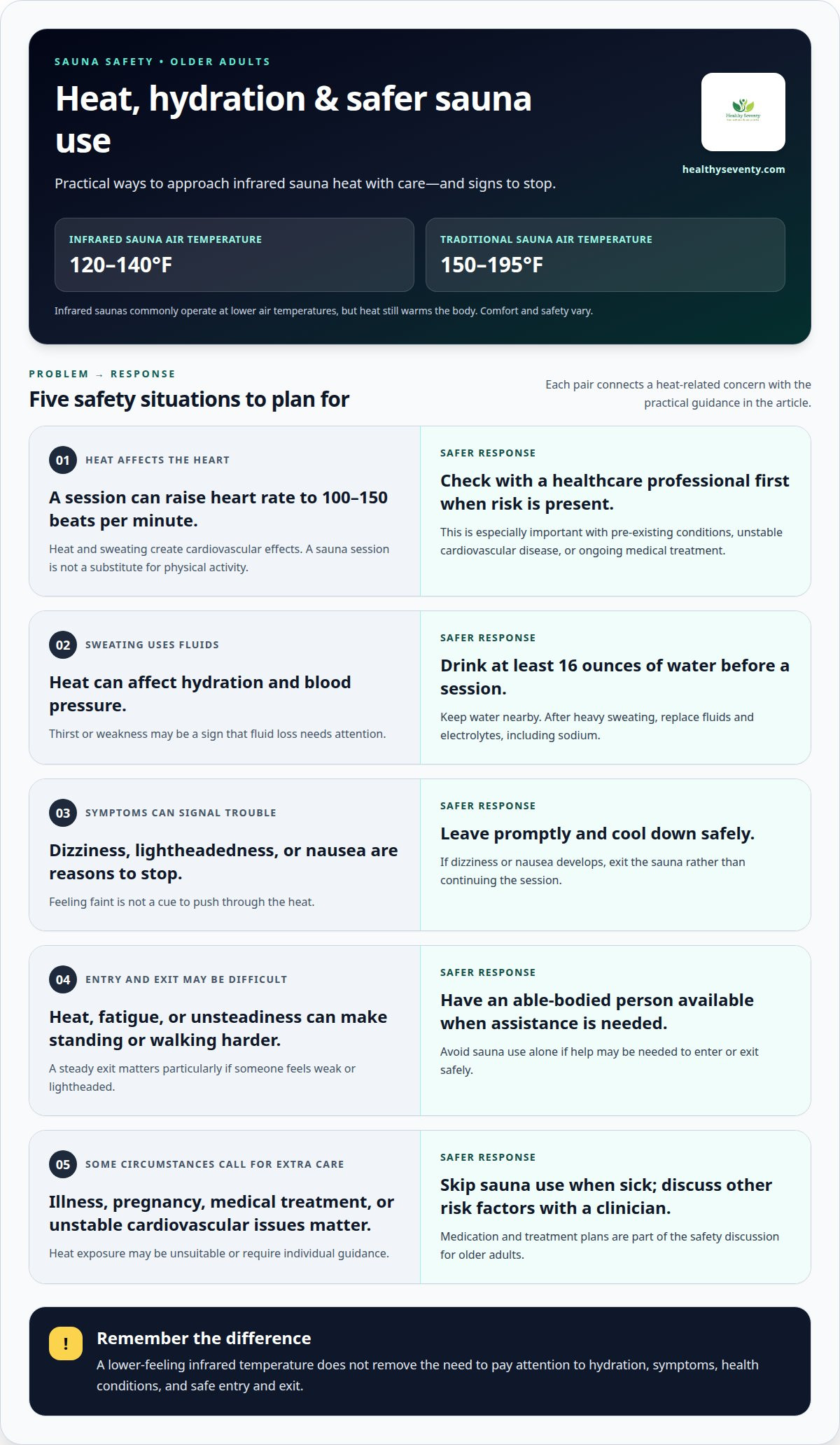
A sauna session can raise heart rate to 100-150 beats per minute. Potential full spectrum infrared sauna benefits for elderly adults may include a warming experience that supports circulation, but the heat still calls for thoughtful precautions.
It’s reasonable to wonder whether infrared heat is more comfortable than a traditional sauna and whether it offers meaningful wellness benefits. To assess full spectrum infrared sauna benefits for elderly adults, distinguish possible effects from proven medical treatment. Infrared saunas use light to produce heat and typically operate at lower temperatures than traditional saunas, but comfort and safety vary.
This guide explains how full spectrum infrared saunas work, what research suggests about circulation, and how older adults can approach home use more safely. It also covers when health conditions or medications make it especially important to discuss sauna use with a healthcare professional before starting.
Table of Contents
Cardiovascular health and circulation
Infrared sauna heat can increase heart rate and encourage sweating, creating cardiovascular effects that may feel like a gentle physical demand. Mayo Clinic describes these responses as similar to some reactions during exercise, but a sauna session is not a substitute for physical activity. A session can raise heart rate to 100-150 beats per minute, so the response matters for older adults with heart conditions or limited heat tolerance.
Long-term Finnish KIHD research followed 2,315 middle-aged men for 20 years. Compared with sauna use once weekly, use four to seven times a week was associated with a 40% lower risk of all-cause mortality, a 50% lower risk of fatal cardiovascular disease, and a 63% lower risk of sudden cardiac death. These findings describe associations, not proof that frequent sauna use caused the differences. The participants were men, and traditional saunas, not specifically full spectrum infrared models, were studied. The findings therefore cannot establish the same effects for every older adult or sauna type.
For cardiovascular conditioning, heat temporarily increases circulation and heart workload. That response is different from exercise, which challenges the body through movement. Finnish study sessions averaged about 19 minutes, and some research used traditional sauna temperatures of at least 174°F. Those conditions differ from many infrared sessions, so the results shouldn’t be treated as a direct prescription. Research on inflammation also shouldn’t be inferred from mortality findings alone: the study outcomes do not show that sauna use reduces inflammation.
Infrared sauna therapy has also been studied in people with heart failure. A meta-analysis reported improved cardiovascular health markers after sessions lasting about 15 minutes, followed by 30 minutes of rest, five times per week. This clinical finding is not a self-directed routine for someone with heart failure. Older adults with cardiovascular conditions should discuss heat exposure with a healthcare professional, who can consider symptoms, medications, blood pressure, and the person’s overall stability.
What Is an Infrared Sauna?
An infrared sauna uses light to produce heat, rather than heating the surrounding air first. Infrared cabins commonly operate around 120-140°F, while traditional saunas typically run at 150-195°F. That lower air temperature can feel more manageable for some people, but heat exposure still warms the body and can affect comfort. The temperature setting, session length, and individual response all matter. Infrared light is not a treatment that repairs damaged joints or removes the underlying cause of arthritis.
For joint pain or stiffness, warmth may make movement feel more comfortable for a time. For example, someone with stiff knees may find gentle heat soothing before ordinary stretching or walking. This kind of temporary comfort is different from treating arthritis itself. A study published in Clinical Rheumatology followed 34 people with rheumatoid arthritis or ankylosing spondylitis. Participants completed eight infrared sauna sessions over four weeks, with treatments lasting 20 minutes twice weekly. The study examined symptoms, but its findings do not establish that infrared exposure reverses joint damage.
Infrared heat also warms the muscles around sore joints. Relaxing tense muscles may make movement feel less restricted, while a rise in body temperature may contribute to temporary comfort. Effects vary according to the source of pain, heat tolerance, and sauna temperature. For chronic pain, consider sauna use a possible comfort measure, not a replacement for an established care plan.
Researchers have also examined sauna use alongside other approaches. In a 12-week program, infrared sauna therapy combined with underwater exercise was associated with reduced pain symptoms in women with fibromyalgia. Because the program included exercise, the result cannot be attributed to sauna exposure alone. People managing fatigue or widespread muscle pain can use this distinction to set realistic expectations: heat may support relaxation, but it is not a proven standalone treatment for chronic conditions.
Medication, hydration, and heat-related safety
Older adults with pre-existing conditions, unstable cardiovascular disease, or ongoing medical treatment should discuss sauna use with a clinician first. Leave the sauna immediately if dizziness or nausea develops.
Heat and sweating can affect hydration and blood pressure, so preparation and awareness of symptoms matter during every session.
Hydration, Blood Pressure, and Fainting
Hydration means replacing fluids lost through sweating before thirst or weakness becomes a concern. The suggested guidance recommends drinking at least 16 ounces of water before a sauna session. Heat can also affect blood pressure, and feeling faint or dizzy is a reason to stop rather than continue. Leave the sauna promptly if lightheadedness or nausea begins, then cool down safely.
Assistance During Sauna Use
Having another able-bodied person available to help an older adult enter and exit the sauna can be important if heat, fatigue, or unsteadiness makes standing or walking difficult. Keep water nearby before the session, and avoid using the sauna alone if assistance is needed. A steady exit matters especially if the user feels weak or lightheaded.
Hydration and Contraindications
Contraindications are health circumstances that make heat exposure unsuitable or call for extra care. People who are sick should skip sauna use because heat may add strain during recovery. Pregnant people, those with unstable cardiovascular issues, and people receiving medical treatment should discuss sauna use with a clinician first. After heavy sweating, replace fluids and electrolytes, including sodium, to support recovery.
Medication and Heat-Related Safety
Medication safety means considering how heat exposure may affect someone’s health alongside their medicines and treatment plan. Share current medicines and relevant conditions with a clinician before beginning regular sessions, especially with cardiovascular disease or blood-pressure concerns. Avoid alcohol around sauna use, since it can complicate safe heat exposure. After leaving, allow at least 30 minutes before a cold shower or plunge, giving the body time to cool gradually.
At-home sauna guidance for older adults
A cautious home routine starts with comfort, not a long session or a high temperature. For a first infrared sauna visit, guidance suggests about 110°F for five to 10 minutes, then gradual increases as the person tolerates the heat. Another suggested approach is reaching 15 minutes after a week and building toward 20 minutes over a month. These schedules differ, so a shorter session is a sensible starting point.
Use a temperature and length that allow the person to leave easily and feel steady afterward. Some guidance suggests 120-140°F for older adults, while other advice favors beginning near 110°F. That difference is a reason to start conservatively rather than chase a target. Keep water nearby, arrange a clear path to the door, and have another able-bodied person available if entering or exiting safely is difficult.
Sauna use should complement, not replace, everyday movement or prescribed exercise. Heat may feel relaxing, but it doesn’t build strength, balance, or function in the same way as movement. Treat infrared sauna use as a separate wellness activity and notice how your body responds during and afterward. Stop and leave if dizziness or nausea occurs. Red light and sauna heat are also distinct approaches, so don’t assume a claim about red light describes the effects of an infrared sauna.
For home use, choose a session length that leaves time to cool down and regain comfort before standing or resuming daily tasks. Avoid turning frequent use into a goal before a shorter routine feels manageable. A simple record of temperature, duration, and how the person feels afterward can help identify a comfortable pattern to discuss with a healthcare professional, particularly when health conditions or treatment affect heat tolerance. To explore a home option designed for relaxation, consider a home infrared sauna.
Healthy Seventy: Home Infrared Sauna for Relaxation
Healthy Seventy offers a Home Infrared Sauna for Relaxation as an at-home wellness option for older adults considering sauna use. After weighing potential effects and safety precautions, it may suit someone seeking a dedicated space for warmth and relaxation, rather than a treatment for cardiovascular disease, arthritis, or another medical condition. Sauna use should complement, not replace, guidance from a healthcare professional when health concerns or medications affect heat tolerance.
Healthy Seventy focuses on the wellbeing of adults aged 60 and older, with practical wellness information alongside carefully selected products. Taking time to consider personal comfort, safe entry and exit, and a gradual approach can help make an informed decision about home sauna use.
If you’d like to learn more, please contact Healthy Seventy.
Choose a Wellness Routine That Fits You
A home wellness habit should suit your comfort, daily routine, and reasons for considering heat. Rather than treating sauna use as a measure of progress, view it as an optional way to make space for relaxation. Consider potential full spectrum infrared sauna benefits for elderly adults with realistic expectations and attention to what feels manageable for you.
Your next step can be deciding whether a home sauna suits the kind of routine you want to build. If you’d like to explore that option, contact Healthy Seventy about home sauna choices. Keep your personal needs at the center of the decision, and choose a path that supports your wellbeing with care and confidence.
Frequently Asked Questions
Can saunas help with detoxification?
Sweating in a sauna isn’t proof that the body is detoxifying. Sweating primarily cools the body, and fluids lost during a session need replacing. The liver and kidneys process and remove many waste products; sauna use shouldn’t be treated as a way to cleanse the body or replace medical care. Focus on comfort and hydration rather than expecting sauna heat to remove toxins.
Does less heat mean fewer health benefits?
No. A lower temperature alone doesn’t show that a sauna offers fewer benefits. Infrared and traditional saunas transfer heat differently, and studies of one type don’t establish equivalent effects for another. Comfort matters, but it doesn’t prove a particular health outcome. Consider the sauna type, the evidence behind a claim, and your own tolerance rather than judging benefits by temperature alone.
Which Type of Sauna is Best?
There isn’t one sauna type that’s best for every older adult. Infrared saunas use light to warm the body, while traditional saunas heat the surrounding air. Someone who finds intense ambient heat uncomfortable might prefer an infrared model, while another person may favor a traditional sauna. The right fit depends on comfort, health circumstances, and the evidence relevant to the intended use.
What are the evidence-based benefits of full-spectrum infrared saunas for older adults?
Research on infrared sauna use has explored circulation, cardiovascular markers, pain symptoms, and frailty measures. These findings don’t establish that every full-spectrum sauna produces the same results: studies of infrared sauna therapy don’t necessarily evaluate every wavelength combination or device. Treat broad findings about infrared saunas as relevant background, not proof of a specific full-spectrum model’s effects. Relaxation is a reasonable personal goal, distinct from a proven medical benefit.
Do infrared saunas improve cardiovascular health, circulation, or blood pressure in elderly people?
Research suggests possible cardiovascular effects, but it doesn’t prove that infrared sauna use improves heart health for every older adult. Long-term findings on Finnish sauna use involved middle-aged men, so they don’t directly establish outcomes for all seniors. Blood pressure response also matters: anyone with cardiovascular disease or blood-pressure concerns should discuss heat exposure with a healthcare professional before establishing a routine.
Can infrared sauna use help with arthritis, chronic pain, or mobility in seniors?
Infrared heat may offer temporary comfort to some people with stiff or sore muscles, but it isn’t a cure for arthritis or chronic pain. Feeling more comfortable after warming up doesn’t necessarily mean joint function or mobility has improved. Keep prescribed care and suitable movement activities separate from sauna use. This information is for educational purposes and does not replace professional medical advice.
Comments