


Creating a Safe and Accessible Home Environment for Seniors
Updated: Sep 16

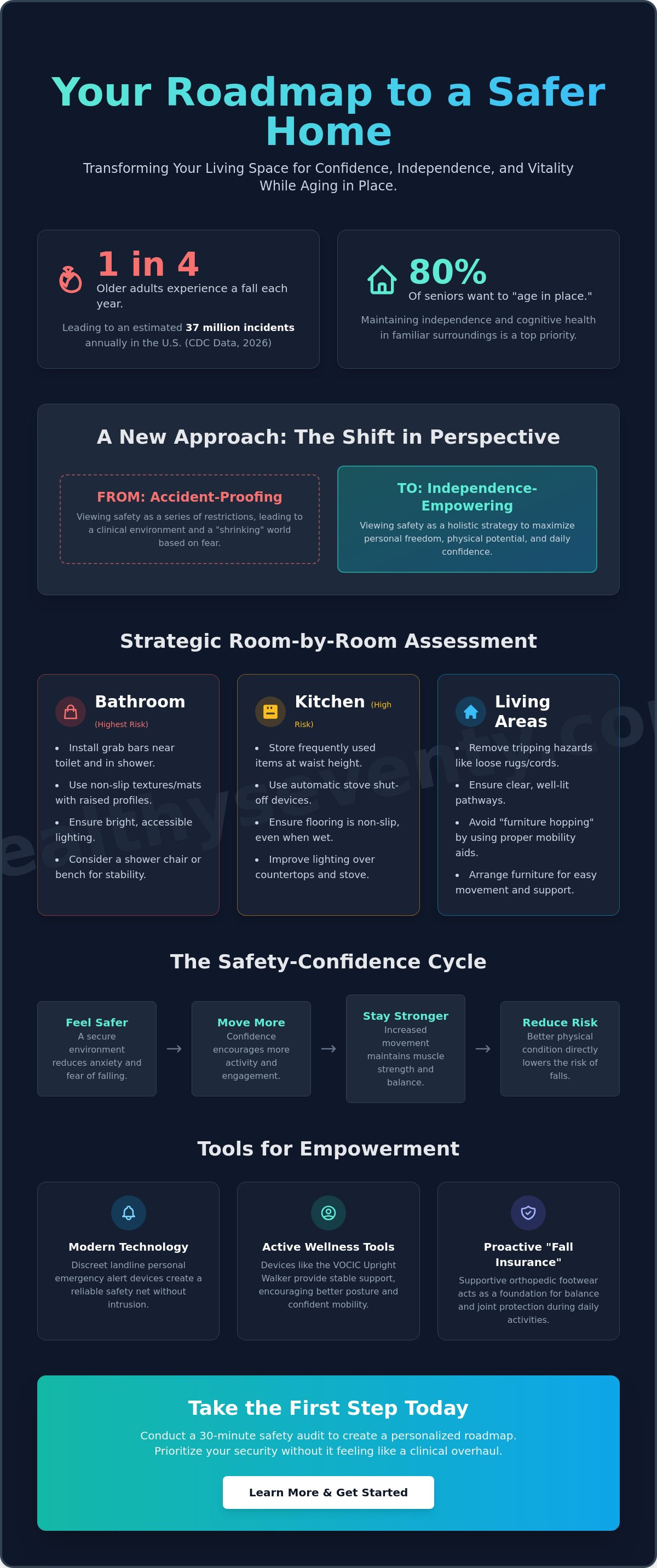
According to the latest CDC data for 2026, one in four older adults in the U.S. experiences a fall each year, leading to an estimated 37 million incidents annually. While these numbers are sobering, they don't have to define your future. You've worked hard to build a life of meaning in your current home, and like 80 percent of your peers, you likely want to stay exactly where you are. It's natural to feel a bit lost when faced with technical modification codes or the fear that a single slip might compromise your independence. You deserve to feel secure in your own hallways without your home feeling like a clinical facility. We're here to help you navigate home safety for seniors with clarity and ease.
We'll help you transform your living space into a sanctuary of vitality and security with our comprehensive, expert-backed safety roadmap. This guide simplifies the process by providing a clear, prioritized checklist of enhancements that truly support your daily life. You'll learn how to select reliable tools, such as the VOCIC Upright Walker or landline personal emergency alert devices, that blend seamlessly into your routine. By the end of this article, you'll have the confidence to move freely throughout your home and the peace of mind that comes from a protected environment.
Key Takeaways
Discover how a holistic approach to home safety for seniors protects your cognitive well-being while reinforcing your daily confidence.
Learn to conduct a strategic room-by-room assessment to eliminate hazards in high-risk areas like the bathroom and kitchen.
Understand the role of modern technology, such as landline personal emergency alert devices, in creating a discreet and reliable safety net.
Explore how active wellness tools and orthopedic footwear act as a proactive form of "fall insurance" for your joints and balance.
Master a 30-minute safety audit to create a personalized roadmap that prioritizes your security without feeling like a clinical overhaul.
Table of Contents
Redefining Home Safety: Why Aging in Place Starts with Confidence
Safety is often viewed through a lens of restriction, yet the modern approach to home safety for seniors is actually about expansion. It's the harmonious intersection of a well-designed environment, intuitive technology, and your own physical vitality. By 2026, we've moved past the era of reactive repairs. Today, safety standards prioritize proactive wellness, ensuring your home remains a place where you thrive rather than just a space where you avoid accidents. This shift allows you to maintain your "living legacy," preserving the stories and memories within your walls while staying physically capable of enjoying them. True security is about more than just avoiding a fall; it's about the freedom to live fully.
Choosing Aging in Place isn't just a lifestyle preference; it's a vital component of cognitive health. Familiar surroundings provide mental anchors that support memory and reduce the cognitive load of navigating daily life. When you know exactly where the light switch is or how the morning sun hits the kitchen table, your brain can focus on more meaningful engagement with the world. This environmental continuity is essential for maintaining clarity and purpose as you age.
The Connection Between Safety and Mental Wellbeing
A secure home environment does more than protect your body. It soothes your mind. When you feel uncertain about your footing or struggle with dim hallways, your body releases cortisol, the primary stress hormone. Chronic anxiety over potential falls can lead to a "shrinking" of your world as you avoid certain rooms or activities. By optimizing your layout and ensuring bright, consistent lighting, you support your natural circadian rhythms. This leads to better sleep, improved mood, and a clearer mind. Independence is the strongest predictor of long-term wellness, and that independence begins with a home that feels like a partner in your journey.
Shifting from "Accident-Proofing" to "Independence-Empowering"
It's time to re-frame how we view safety modifications. A grab bar isn't a sign of frailty; it's a tool for freedom that allows you to use the bathroom with total autonomy. When you have the right equipment, you enter the "safety-confidence cycle." This cycle is simple: the safer you feel, the more you move. The more you move, the stronger your muscles stay. This increased strength further reduces your risk of injury, creating a positive loop of vitality. Home safety for seniors in 2026 is a holistic wellness strategy designed to maximize your personal freedom and physical potential through every stage of life.
Eliminating Fall Hazards: A Strategic Room-by-Room Assessment
When you begin your journey toward a more secure living space, the sheer number of possible changes can feel overwhelming. It's helpful to view home safety for seniors as a series of zones, prioritizing areas based on risk level rather than convenience. A strategic room-by-room assessment allows you to focus your energy where it matters most, ensuring that your efforts yield the highest return in confidence and security. By establishing a clear hierarchy, you transform a technical project into a manageable path toward long-term independence.
The High-Risk Zones: Bathroom and Kitchen
The bathroom is statistically the most hazardous room in the home due to the combination of moisture and hard surfaces. Prioritizing this space is the first step in effective Preventing Falls at Home. Beyond basic grab bars, consider installing non-slip textures with raised profiles in the shower and around the toilet. In the kitchen, focus on ergonomics to prevent strain. Storing frequently used items at waist height reduces the need for dangerous reaching or bending. This simple change, paired with fire prevention tools like automatic stove shut-off devices, creates a kitchen that supports your culinary passions without the added stress.
Flooring and Lighting: The Foundation of Stability
Living areas often hide subtle dangers, specifically the habit of "furniture hopping." This happens when you rely on tables or chair backs for support while moving through a room. If you find yourself doing this, it's a sign that your current mobility aids might need an upgrade. For instance, using a VOCIC Upright Walker can provide the steady support you need to move across open spaces with ease. Additionally, the debate over rugs is settled by one rule: if it isn't secured with heavy-duty double-sided tape or a non-slip pad, it's a hazard. Foundationally, smart lighting is your best ally. Motion-activated sensors in hallways and stairways eliminate the need to fumble for switches in the dark, keeping your path clear and your footing certain.
Stairways and thresholds require high-contrast visibility to be navigated safely. Applying a strip of bright, textured tape to the edge of each step helps your eyes distinguish depth, especially in low light. Ensure that handrails extend past the top and bottom steps to provide continuous support. By addressing these specific points, you ensure that home safety for seniors is a proactive, empowering choice that honors your desire to move freely through every corner of your home.
Beyond Grab Bars: Modern Technology for Senior Security
While physical modifications like ramps and lighting provide the physical framework for security, the technological landscape of 2026 offers an "invisible" layer of protection that was previously unimaginable. Modern home safety for seniors has evolved from reactive buttons to proactive, predictive systems that support your lifestyle without feeling intrusive. These innovations act as a silent partner in your daily routine, ensuring that help is always within reach while respecting your privacy and dignity. By integrating these tools, you're not just adding gadgets; you're building a comprehensive safety net that adapts to your specific needs.
Personal Emergency Alert Systems
The medical alert industry has seen significant shifts. For many, a Landline Personal Emergency Alert Device remains the gold standard for reliability within the home, offering a stable connection that doesn't rely on cellular signals or battery charging. However, 2026 has also introduced GPS-enabled wearables that offer protection during your morning walks or grocery trips. A critical advancement is automatic fall detection. This technology, which often adds a modest monthly fee of $5 to $15, is a non-negotiable feature for those living solo. It ensures that if a fall occurs and you're unable to speak, the system automatically initiates a call for help. When choosing a system, it's vital to integrate it into a family communication plan so your loved ones are notified instantly through their own devices.
Smart Home Integrations for 2026
Voice-activated assistants, such as the Amazon Echo Show 8, have become essential safety tools. They allow you to call for help, adjust lighting, or check who's at the door entirely hands-free. Beyond convenience, 2026 trends show a move toward privacy-conscious monitoring. Instead of cameras, newer systems use radar or thermal imaging to detect unusual movement patterns or gait changes that might predict a fall risk. This data allows for intervention before an accident happens, all while keeping your private life private.
Safety also extends to the invisible elements of your environment, such as the quality of the water you drink and the air you breathe. Installing countertop reverse osmosis water filters is a proactive step toward long-term internal health, removing contaminants that can impact your vitality over time. Similarly, automated stove shut-offs and leak detectors, like the GoveeLife Water Leak Detector, prevent household disasters before they start. These smart integrations ensure that your home remains a sanctuary of health, protecting you from both obvious hazards and hidden environmental risks.
The Mobility Connection: How Active Wellness Prevents Household Injuries
Real home safety for seniors starts with the person moving through the space. While we've discussed environmental modifications and smart technology, your physical vitality is your most reliable "fall insurance." Maintaining muscle recovery and joint health ensures you have the strength and flexibility to navigate your sanctuary with ease. Proactive wellness choices, like utilizing a Home Infrared Sauna for Relaxation, can keep your body flexible and ready for movement. By treating your physical health as a foundational safety modification, you empower yourself to live without the constant fear of a slip or stumble.
Footwear and Balance
Your connection to the floor is only as stable as your footwear. Aging feet often require more than just a soft sole; they need the science of slip-resistance and arch support to maintain equilibrium. Traditional indoor slippers can be surprisingly dangerous because they lack a secure heel and often provide little traction on smooth surfaces. Transitioning to supportive "house shoes" or Orthofeet Orthopedic Walking Sneakers provides the stability required to maintain balance on various floor types. These sneakers aren't just shoes; they are a critical safety modification for the body that protects your joints and keeps your center of gravity where it belongs.
Mobility Aids as Safety Devices
Many people wait until after an injury to consider a mobility aid, but taking a proactive approach allows you to maintain your posture and independence before a crisis occurs. A traditional walker often forces a forward-leaning posture, which can actually increase the risk of a fall by shifting your weight too far ahead. In contrast, an upright walker encourages you to stand tall and look ahead rather than at your feet. This posture preserves a safer center of gravity and reduces the cumulative strain on your back and shoulders.
Safe household navigation is much easier when you aren't fighting constant discomfort, which is why non invasive joint pain relief is such a vital part of a holistic safety plan. When you move without pain, you move with more confidence and precision. If you're ready to invest in your long-term vitality, explore our curated selection of orthopedic mobility solutions to find the perfect fit for your lifestyle.
Creating Your Safety Roadmap: Implementation and Next Steps
Moving from the "planning" phase to "action" is where many feel a sense of hesitation. It's one thing to recognize that your home needs adjustments; it's quite another to decide which rug to tape down first or which device to purchase today. To make this transition seamless, we suggest starting with a 30-minute "Senior Safety Audit." Walk through your home with a notepad, viewing each room through the lens of your daily routine. Ask yourself: where do I feel a moment of hesitation? Is there a spot where I always reach for the wall? Identifying these micro-moments of uncertainty allows you to prioritize home safety for seniors based on your actual lived experience rather than a generic list of rules.
The 3-Tiered Implementation Plan
Organizing your modifications into tiers helps manage both your time and your budget, ensuring that the most critical risks are addressed immediately while building toward a lifestyle of total vitality. This structured approach prevents you from feeling overwhelmed by the technical aspects of home modification.
Tier 1: Zero-Cost Changes. Focus on immediate environment clearing. Remove loose throw rugs, clear clutter from high-traffic pathways, and rearrange furniture to ensure you have wide, unobstructed lanes for movement. Ensure that frequently used items in the kitchen and bedroom are within easy reach at waist height.
Tier 2: Essential Investments. These are the tools that provide a baseline of security. This includes installing high-quality grab bars in the bathroom and securing a Landline Personal Emergency Alert Device for reliable 24/7 help. It's also the time to invest in Orthofeet Orthopedic Walking Sneakers to ensure every step you take is supported by professional-grade stability.
Tier 3: Long-Term Wellness. Once your foundation is secure, look toward enhancements that promote recovery and ease. This might include a Home Infrared Sauna for Relaxation to maintain joint flexibility or a VOCIC Upright Walker to support your posture during longer outings. These items aren't just about safety; they're about enjoying your home to the fullest.
When discussing these changes with family, frame the conversation around your autonomy. Modifications aren't a sign that you're being "looked after" in a restrictive sense. Instead, they are the very tools that allow you to maintain your legacy of independence. By leading the conversation and presenting your 3-tiered plan, you show your loved ones that you're taking a proactive, empowered approach to your own well-being. This clarity provides immense peace of mind for everyone involved.
Maintenance and Review
A safe home isn't a "set it and forget it" project. We recommend setting a quarterly schedule to review your environment. Use this time to check the batteries in your smoke detectors and emergency alert pendants. Verify that your motion-activated lighting is still positioned correctly and that no new tripping hazards have accumulated. As your health and vitality evolve, your needs might change too. You might find that a Foldable Mobility Scooter for Seniors becomes a welcome addition for travel, or that a Shockwave Therapy Device for Pain Relief helps you stay active. Remember, home safety for seniors is a continuous journey of making empowered choices that honor your strength and preserve your freedom.
Your Journey Toward a Safer, More Vibrant Home
Transforming your living space isn't about acknowledging limitations; it's about choosing a future defined by vitality and freedom. You've learned that home safety for seniors is a holistic endeavor that blends a well-organized environment with modern technology and your own physical wellness. By addressing high-risk zones like the bathroom and kitchen first, you build a foundation of security that allows your mind to rest and your confidence to grow. Whether you're securing rugs or upgrading to supportive footwear, every small change is a powerful step toward preserving your legacy and your independence.
At Healthy Seventy, we've been dedicated to empowering seniors since 2024. We believe that the right tools should enhance your life without making your home feel like a clinical space. Our expert-vetted wellness products are selected specifically to support your journey toward lasting vitality and peace of mind for your entire family. If you're ready to take the next step in your safety roadmap, explore our curated collection of home safety and mobility essentials today. You have the wisdom and the tools to create a sanctuary that truly honors the life you've built. We're honored to be your partner in this next chapter of active, secure living.
Frequently Asked Questions
What are the most common home hazards for seniors living alone?
Leading hazards include loose electrical cords, dim lighting in transitional spaces, and heavy items stored on high shelves. These elements create "micro-risks" that accumulate over time. Addressing these small details is a vital part of home safety for seniors, ensuring that your environment remains a partner in your independence rather than a source of hidden obstacles.
How can I make my bathroom safer without a full renovation?
You can significantly improve bathroom security with non-permanent additions like high-traction adhesive strips for the tub and tension-mounted safety bars. Swapping a standard showerhead for a handheld model allows for seated bathing, which reduces fatigue and slip risks. These simple, curated adjustments provide immediate peace of mind without the stress or cost of a major construction project.
Is a medical alert system necessary if I have a smartphone?
A dedicated alert device is superior to a smartphone because it is designed for use during a crisis when fine motor skills might fail. Smartphones often require unlocking or navigating menus, which is difficult if you're injured or disoriented. A Landline Personal Emergency Alert Device offers a simple, one-touch connection that is always accessible, ensuring help is just a single press away.
How do I convince an aging parent to accept home safety modifications?
Frame the conversation around the concept of "independence-empowerment" rather than safety restrictions. Focus on how modifications like Orthofeet Orthopedic Walking Sneakers allow them to walk with more confidence and less pain. When parents see these tools as ways to stay active and in control of their own legacy, they are much more likely to embrace the changes.
What are the best low-cost ways to prevent falls at home?
The most effective low-cost strategies involve clearing high-traffic pathways and securing loose cords with simple cable ties. Rearranging your kitchen so that heavy pots and daily dishes are at waist height eliminates the need for stools or dangerous reaching. These zero-cost adjustments are foundational to home safety for seniors and provide an immediate boost to your daily security.
Can smart home technology really improve safety for seniors?
Smart technology provides a proactive safety net by automating tasks that might otherwise lead to strain or accidents. Voice-activated assistants allow you to control lighting or call for help without moving, while automated leak detectors prevent household disasters. These tools integrate seamlessly into your lifestyle, offering a sophisticated level of protection that respects your privacy and enhances your comfort.
What should I look for in a personal emergency alert device in 2026?
In 2026, look for devices that offer automatic fall detection and integrated GPS for protection outside the home. Reliability is key, so many seniors still prefer a landline-based system for its stable connection. Ensure the device has a long battery life and a simple, intuitive interface that you feel confident using every day, regardless of the situation.
How often should a home safety audit be conducted?
Conduct a thorough walkthrough of your home at least once every quarter to ensure all systems are functioning correctly. It's also wise to perform an audit after any change in health or mobility, such as starting a new medication or recovering from a minor injury. This methodical approach ensures your safety roadmap evolves alongside your needs, keeping your home a sanctuary of wellness.


Comments