
Comfortable Walking Shoes for Seniors: Compare Support and Cushioning
The most cushioned walking shoe isn’t always the steadiest choice. Wear walking shoes for regular outings and longer walks, and compare how securely they hold your heel, how their soles grip the ground, and how their cushioning feels underfoot. The right balance matters more than softness alone when choosing comfortable walking shoes for seniors on long walks.
It makes sense to want shoes that feel gentle on your feet, especially when a walk lasts longer than usual. But a good fit and steady footing matter just as much as cushioning, and the right choice depends on your comfort, balance, and usual walking surfaces. This guide explains how to compare comfortable walking shoes for long walks seniors can wear, focusing on fit, side-to-side support, shock absorption, and budget.
Table of Contents
Stability and side-to-side support
Stable walking shoes combine a secure heel, supportive base, and dependable traction. Each year, millions of adults ages 65 and older fall, according to the Centers for Disease Control and Prevention; the World Health Organization identifies adults over 60 years as the age group with the greatest number of fatal falls.
Supportive Footwear
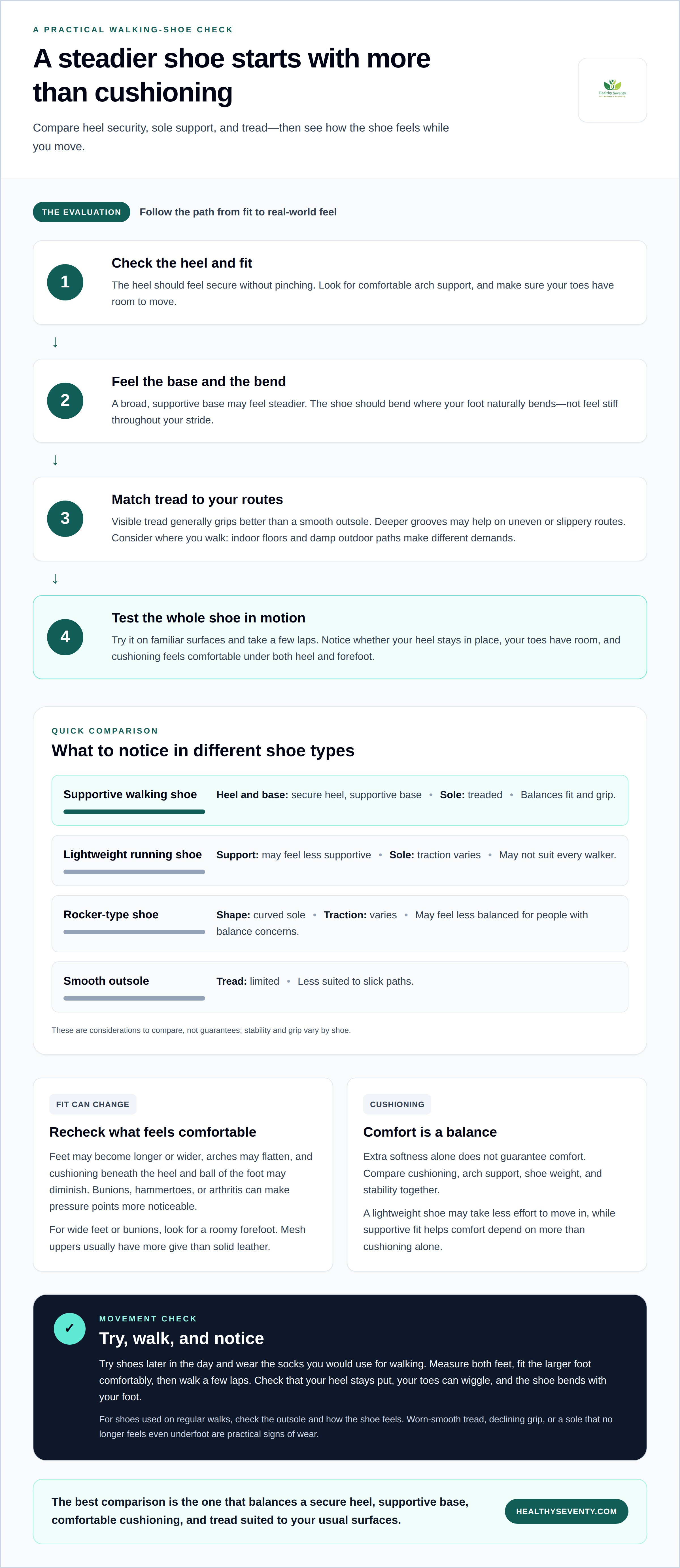
Supportive footwear helps keep your foot in place instead of letting it shift with each step. Look for a heel that feels secure without pinching and arch support that feels comfortable. Some lightweight running shoes may offer less stability than you want for everyday pavement walks, so compare how each shoe holds your foot and feels underfoot.
Sole Support
The sole affects how firmly your foot meets the ground and how stable each step feels. A broad, supportive base may feel steadier than a rocker-style sole, which can feel less balanced for people with balance concerns. Check that the shoe bends where your foot naturally bends rather than feeling stiff throughout your stride.
Traction for Stability
Traction helps the sole grip walking surfaces, especially slick pavement. Visible tread generally offers more grip than a smooth outsole, while deeper grooves may help on uneven or slippery routes. Match the tread pattern to where you walk most: smooth indoor floors and damp outdoor paths place different demands on a sole.
Overall Shoe Stability
If you have plantar fasciitis, arthritis, or balance concerns, prioritize a secure heel, supportive base, cushioning, and slip-resistant traction. These features may support comfort and steadier footing, but they do not mean a shoe treats a medical condition. Considering fit and grip alongside cushioning gives you a more complete picture than choosing by softness alone.
Choose shoes that feel steady at the heel and base, with tread suited to the surfaces you walk most.
Cushioning and shock absorption
Cushioning softens contact with the ground, but extra softness alone does not guarantee comfort. Compare cushioning, arch support, shoe weight, and stability together. For long walks, a lightweight shoe may take less effort to move in, while a supportive fit helps keep comfort from depending on cushioning alone.
Age-related changes can affect what feels comfortable. Feet may become longer or wider, arches may flatten, and the fat pad beneath the heel and ball of the foot may diminish. Bunions, hammertoes, and arthritis can also make pressure points more noticeable. A shoe that once fitted well may now feel tight across the forefoot.
For older adults comparing cushioning, consider heel stack height as one factor, but comfort and fit matter too. Treat that range as a comparison point, not a guarantee of comfort: the shoe still needs to feel secure and suit your stride. Try a few steps and notice whether the cushioning feels comfortable under the heel and forefoot, rather than forcing your foot into an unfamiliar position.
Which walking shoes for older adults have the best cushioning and arch support? There is no single option that suits everyone. Compare cushioning, arch support, fit, and weight together, then choose the pair that feels comfortable and supportive rather than simply picking the thickest-looking sole.
What are the best lightweight walking shoes for seniors with wide feet or bunions? Look for a roomy, comfortable forefoot that does not press on toes or bunions. Mesh uppers usually have more give than solid leather, so compare how each material feels. Leave room for your toes to move, and remember that cushioning does not replace grip on slippery ground.
As people age, the arch may flatten and the fat pad cushioning the heel and ball of the foot may diminish, so comfort needs can change.
When should I wear walking shoes?
Wear walking shoes for regular outings and longer walks when you want footwear suited to repeated movement. A pair should feel stable on familiar sidewalks, but a brief indoor try-on cannot show how it performs on every surface. Test it on the routes you actually use, such as pavement, smooth indoor flooring, and gently uneven paths.
At a store, try shoes later in the day, when feet may be slightly swollen. Wear the socks you’d use for walking, then take a few laps rather than simply standing still. Notice whether your heel stays in place, your toes have room, and the shoe bends where your foot naturally bends. Runner’s World testers walked at least 20,000 steps per day while evaluating walking shoes, a reminder that movement reveals more than appearance alone.
What walking shoes are easiest for seniors to put on and take off? A wide opening and simple, adjustable closures can be easier to manage than tight fastenings that are difficult to reach. Make sure the shoe still holds your heel securely once fastened.
Measure both feet because they may differ, and fit the larger foot comfortably. Remeasure foot length at least once every two years, then try shoes later in the day. Walk a few laps and check that your toes can wiggle without touching the front. Shoes that feel snug while standing may become uncomfortable during a longer walk.
How often should seniors replace walking shoes used for long-distance walks? Use the outsole and how the shoe feels as practical guides. Replace a pair when the tread is worn smooth, grip has declined, or the sole no longer feels even underfoot. Check wear across the heel and forefoot, especially after regular pavement walks. A calendar alone cannot show how much the shoe has worn.
Treat the fitting as a movement check: try shoes later in the day, walk a few laps around the store, and confirm they bend where your foot naturally bends.
Budget senior walking shoes
A budget-friendly walking shoe should meet your everyday needs without sacrificing fit, grip, or comfort. For comfortable walking shoes for seniors on long walks, start with the route: neighborhood sidewalks may call for different tread than uneven paths. If you mainly walk on pavement, prioritize comfort and stability over features you are unlikely to use.
Set your priorities before comparing options. Check the fit, outsole traction, and how steady the shoe feels during a short walk. Then consider weight and breathability. A lightweight pair may feel less tiring during everyday movement, while breathable materials can matter on longer outings. Comfortable walking shoes for seniors taking long walks should suit your routine, not just look appealing.
What are the best-rated walking shoes for seniors in 2026? No single rating identifies the best choice for every older adult. Compare current ratings alongside fit, stability, and personal comfort; a highly rated shoe can still feel wrong for your feet or walking surfaces.
A useful budget comparison separates essentials from preferences. Essentials include a comfortable fit, dependable traction, and support that feels stable. Preferences might include color or style. If you stand for long periods, try the shoes while standing and walking. If you use one pair for errands and longer outings, consider comfort and durability together.
Everyday routes: Match tread and cushioning to sidewalks, indoor floors, or rougher paths.
Fit first: Don’t trade toe room or heel security for a lower price.
Special needs: Choose footwear that accommodates your foot shape and regular activities.
Compare the features you’ll rely on most, then select the least costly option that meets those needs. To explore walking sneakers for seniors, consider options designed for supportive everyday wear.
Healthy Seventy: Orthofeet Orthopedic Walking Sneakers
Healthy Seventy offers Orthofeet Orthopedic Walking Sneakers for readers considering orthopedic footwear for everyday walks. Compare fit, cushioning, support, and traction, then consider this option if it suits your needs. The product name identifies the category, but your comfort while moving remains central when choosing shoes for longer outings.
Use the comparison points above to guide your decision: consider where you walk, how the shoe feels, and whether it suits your foot shape. If you are also considering support beyond footwear, Healthy Seventy offers the VOCIC Upright Walker for Seniors. A walker serves a different purpose from shoes, so consider whether it matches the support you are looking for.
For help exploring these options, contact Healthy Seventy.
Make Your Next Walk Your Own
Choosing comfortable walking shoes for long walks as a senior is a personal decision shaped by your usual routes and how you want to feel as you move through the day. Let comfort guide your next step, whether you are planning a familiar outing or looking for footwear that better suits your routine. Walking habits and preferences can change, so allow yourself to adjust your choice over time.
You don’t need to make the decision all at once. A thoughtful choice can begin with identifying what matters most to you, then exploring options at your own pace. If you’d like support as you consider your next step, Contact Healthy Seventy for help. Keep moving toward the walks and daily activities that bring meaning and enjoyment to your life.
Frequently Asked Questions
What features make walking shoes comfortable and supportive for seniors on long walks?
Look for a fit that stays comfortable as your feet move, with cushioning and support suited to your pace and route. Try shoes with the socks you usually wear, and notice any pressure points after walking rather than judging them while seated. If foot pain or a medical condition affects your choice, this information is for educational purposes and does not replace professional medical advice.
Are slip-resistant walking shoes important for seniors, and which models offer good traction?
Slip-resistant traction matters if your usual route includes damp sidewalks, smooth floors, or other slick surfaces. Instead of relying on a model name alone, examine the outsole tread and consider the ground you encounter most. A general claim about traction cannot show how a shoe performs on your routes, so assess the grip in the conditions where you plan to wear it.
How much do comfortable walking shoes for seniors typically cost?
There is no single typical price for every senior walking shoe. Costs vary by brand, construction, and features, so compare options with similar support and fit rather than choosing by price alone. Set a budget around the qualities you will use regularly, such as cushioning for longer outings or a design suited to your everyday walking needs.
What are the best-rated walking shoes for seniors in 2026?
No single rating identifies the best choice for every older adult. Compare current ratings with fit, stability, and personal comfort, since a highly rated shoe may still feel wrong for your feet or walking surfaces.
Comments